
Product Geometry
Is the product thin-walled, thick, complex, large, or continuously formed?
Press Enter to search · Esc to close
Compare six silicone manufacturing routes based on product geometry, material combination, detail requirements, tooling considerations, and production goals.
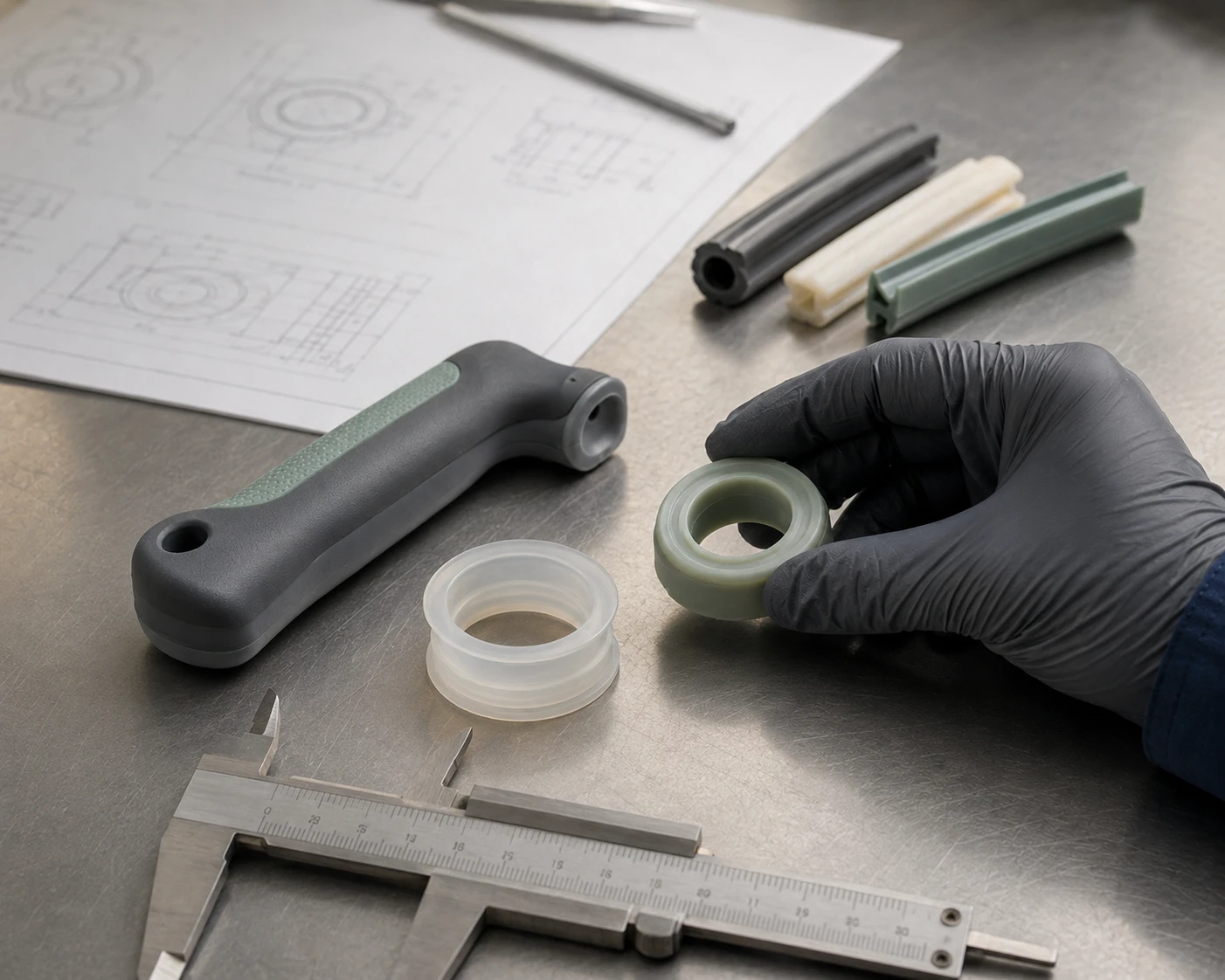
Process selection depends on the product requirements—not only the product name. Use these five factors to narrow down the most relevant manufacturing routes.
Is the product thin-walled, thick, complex, large, or continuously formed?
Is the product made only from silicone, or combined with plastic, metal, or another substrate?
Does the product require fine textures, complex features, multiple colors, or localized silicone details?
Is the project more sensitive to tooling investment, unit cost, development flexibility, or repeatability?
Is the project at prototype, small-batch, medium-volume, or high-volume production stage?
Use these summaries for a first distinction, then open the relevant process page for more detailed guidance.
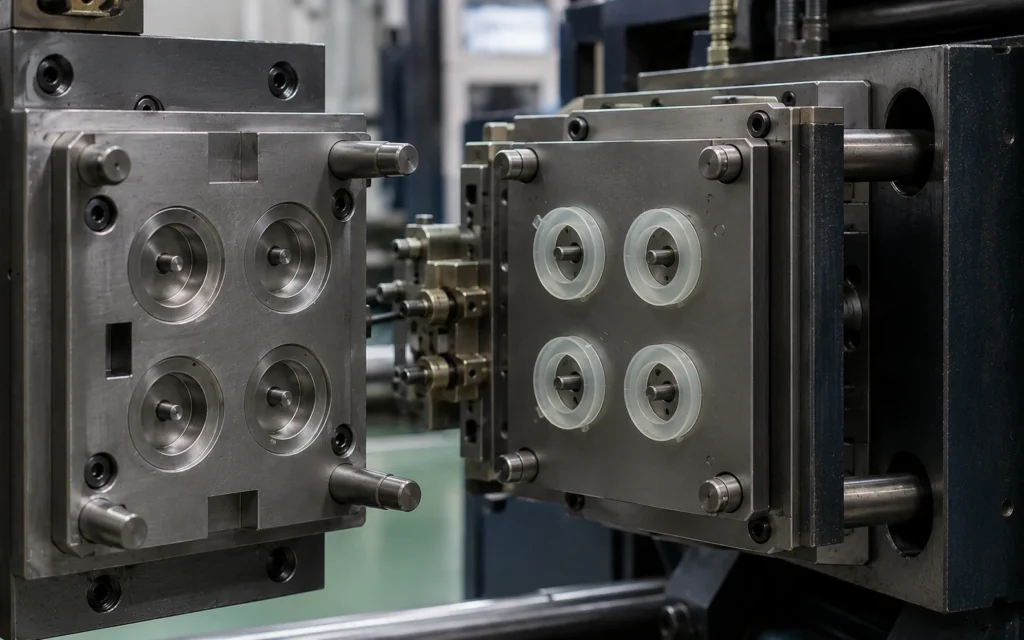
Liquid silicone rubber is injected into a heated mold to form detailed silicone parts.
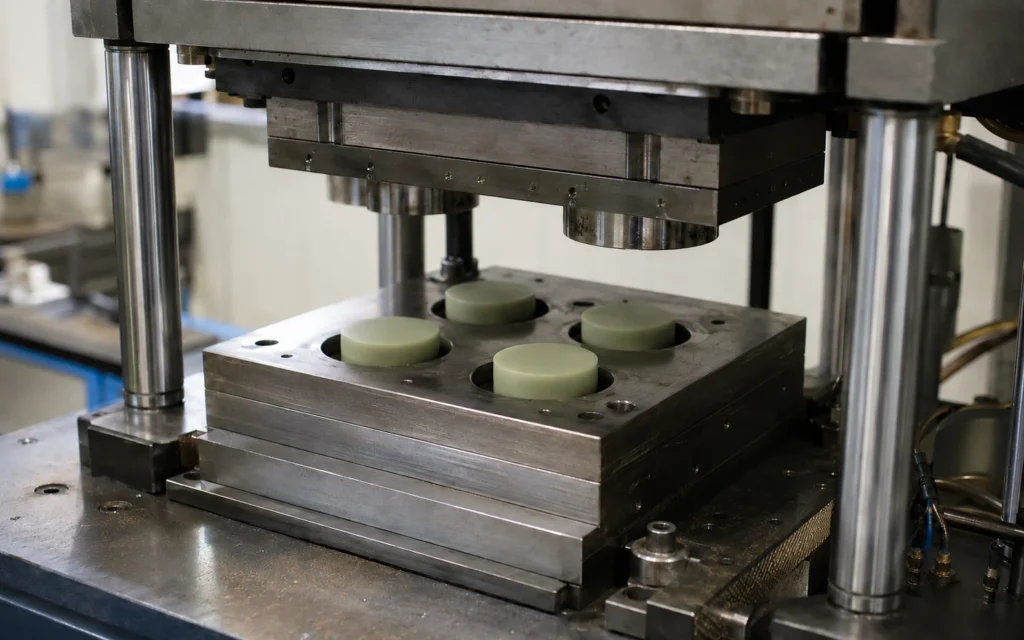
Solid silicone is placed into a heated mold and formed under pressure.
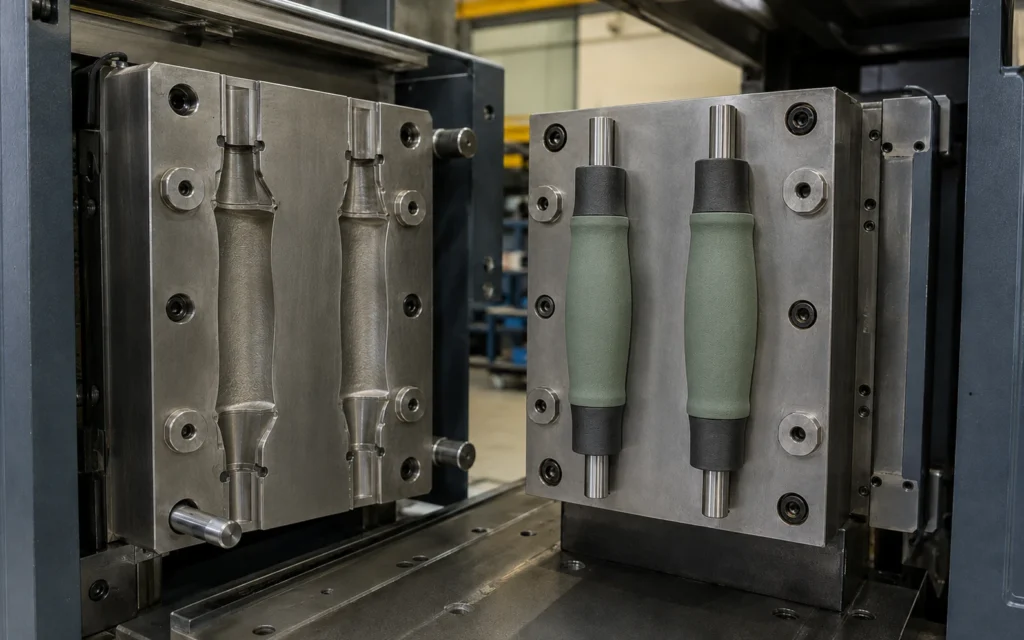
Silicone is molded onto a compatible plastic, metal, or other substrate.
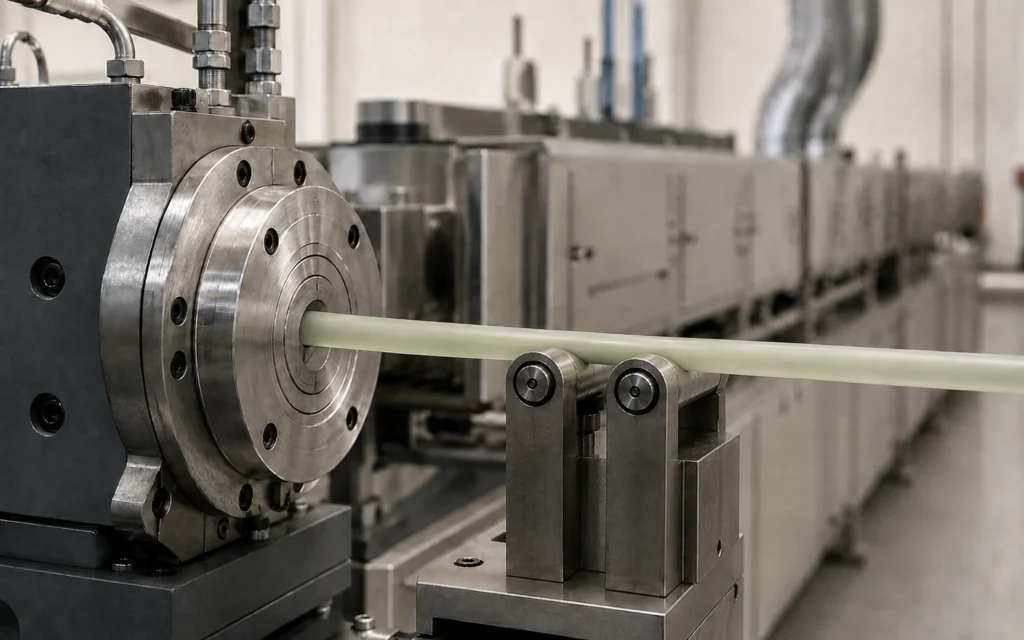
Silicone compound is formed continuously through a shaped die.
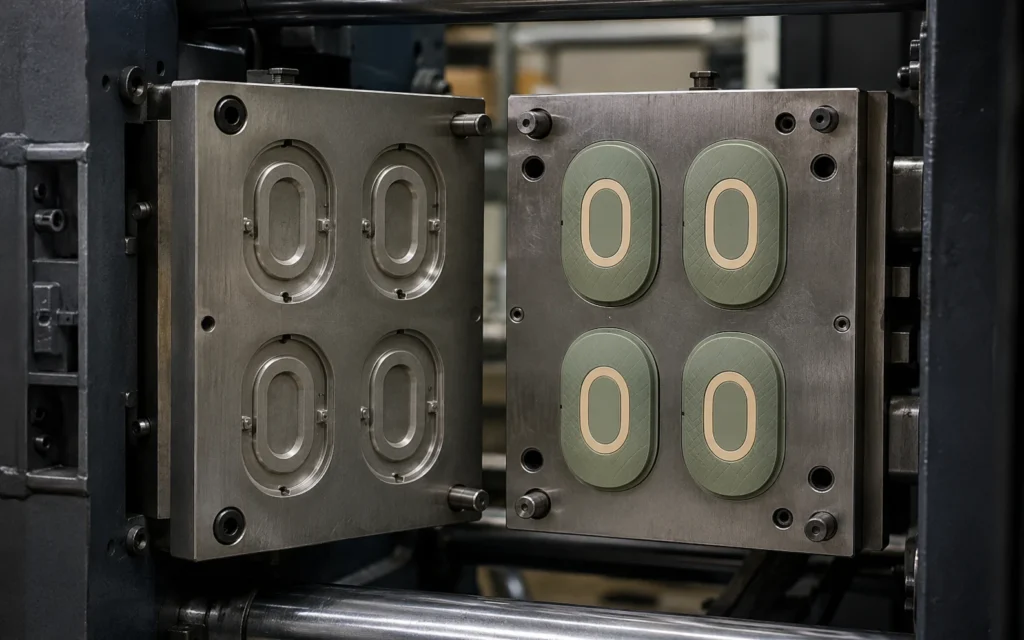
Multiple silicone colors are formed into one integrated molded product.
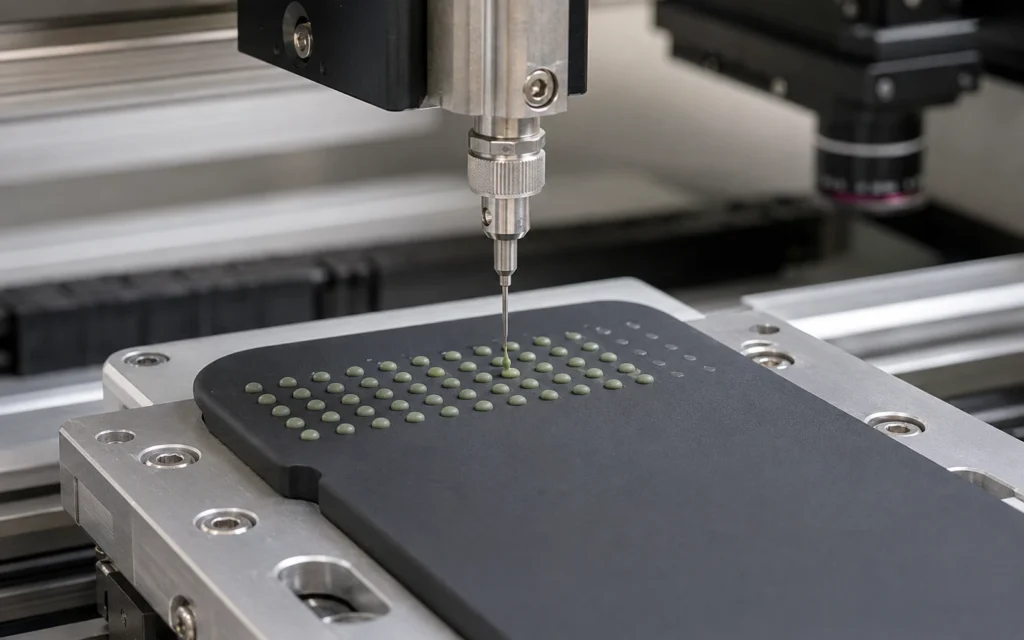
Silicone is precisely deposited onto selected areas for localized details or surface functions.
Compare technical and commercial factors to identify the most relevant silicone manufacturing routes for further evaluation.
| Decision factor | LSR Injection Molding | Silicone Compression Molding | Silicone Overmolding | Silicone Extrusion | Multi-Color Silicone Molding | Silicone Micro-Dispensing |
|---|---|---|---|---|---|---|
| Best Suited For | Complex molded parts requiring fine detail and repeatability | Solid silicone parts with relatively straightforward geometry and flexible batch requirements | Parts combining silicone with a compatible plastic, metal, or other substrate | Tubes, cords, seals, and continuous profiles | Molded products with integrated color zones or patterns | Localized silicone details, dots, logos, textures, or surface features |
| Typical Product Geometry | Complex 3D forms, thin sections, and small details | Simple-to-moderate 3D forms, thicker sections, and larger parts | Multi-material parts, inserts, handles, and bonded areas | Continuous cross-sections | Molded 3D parts with multiple color areas | Small-area or localized features on a base part |
| Material Combination | Liquid silicone rubber | Solid silicone rubber | Silicone plus a compatible substrate | Extrusion-grade silicone | Multiple silicone colors or material shots | Dispensed silicone on a selected surface or substrate |
| Design Complexity | High | Low–Medium | Medium–High | Low–Medium | Medium–High | High for localized details |
| Detail / Precision Capability | High | Standard–Moderate | Project-dependent; interface control is important | Profile-dependent | Medium–High visual detail | High localized detail |
| Tooling Investment | Higher | Lower–Moderate | Moderate–Higher | Lower–Moderate | Moderate–Higher | Project-dependent |
| Relative Unit Cost | Efficient at suitable production scale | Project-dependent | Higher complexity due to multi-material processing | Efficient for continuous lengths | Higher complexity due to multi-stage or specialized processing | Depends on deposition area and cycle requirements |
| MOQ Flexibility | Moderate | Higher flexibility | Moderate | Moderate–Higher | Moderate | Higher flexibility |
| Production Volume Fit | Medium–High to High | Low–Medium | Medium–High | Medium–High continuous production | Medium | Low–Medium |
| Main Advantage | Repeatability, fine detail, and process scalability | Broad part-size flexibility and practical tooling route | Integrated function and multi-material construction | Efficient continuous profile production | Integrated color differentiation | Controlled localized material placement |
| Main Trade-off | Higher tooling and process-system investment | Longer cycles or lower detail than LSR for some designs | Substrate compatibility, bonding, and tooling complexity | Limited to a consistent cross-section | More complex tooling and process control | Less efficient for large-area coverage or high-volume broad application |
This comparison provides relative guidance for initial evaluation. Actual process suitability, tooling requirements, cost structure, MOQ, and production conditions depend on product design, materials, quality requirements, and order details.
Share a drawing, reference image, or product requirement for an initial process review.
We review the product requirements and compare relevant manufacturing routes before discussing the next project step.
Drawing, reference product, application, or preliminary concept.
Review geometry, material combination, detail requirements, and production goals.
Compare relevant manufacturing routes and identify the main trade-offs.
Discuss whether the project should proceed to sampling, tooling evaluation, or further technical review.
Quality requirements are considered throughout requirement review, production, inspection, and packing preparation.
Inspection scope and acceptance criteria are defined according to the product, application, order requirements, and approved specifications.
Define the relevant product, material, appearance, dimensional, and functional requirements before production.
Review key characteristics against the approved sample, drawing, or project specification.
Monitor relevant molding, appearance, dimensional, or process-control points according to product risk.
Confirm finished-product and packaging requirements before shipment release.
Process fit depends on factors such as product geometry, material combination, required detail, tooling priorities, and expected production volume. A drawing, reference image, sample, or clear application description helps us compare the most relevant routes before discussing the next step.
LSR injection molding is commonly evaluated for complex shapes, fine details, repeatability, and scalable production. Compression molding uses solid silicone and is often considered for thicker, larger, or structurally straightforward parts. The suitable option depends on the product design and commercial requirements.
Overmolding is relevant when silicone needs to integrate with a compatible plastic, metal, or other substrate to create a grip, seal, handle, bonded interface, or multi-material component. Substrate compatibility and bonding requirements must be reviewed for each project.
Multi-color molding integrates multiple silicone colors into the molded product structure. Micro-dispensing places silicone only on selected areas for local details, dots, textures, logos, or surface functions. The choice depends on whether the color or detail is structural or localized.
Silicone extrusion is normally evaluated for products with a consistent cross-section, including tubes, cords, seals, strips, and custom profiles. Profile design, material, dimensional requirements, and order details still need project-specific review.
Useful inputs include a 2D or 3D drawing, reference image or sample, product application, material or performance priorities, estimated quantity, branding or packaging requirements, and the target project schedule if applicable.
Share your drawing, reference sample, product image, application requirements, or expected production volume. We will review the project information and discuss a suitable manufacturing route with you.