Silicone Manufacturing Process

Custom Silicone Extrusion Manufacturing

Continuous precision manufacturing for silicone tubing, sealing strips, and complex cross-section profiles. 100% Platinum-cured for zero-odor, food-grade safety, and flawless dimensional stability over infinite lengths.

Custom Silicone Extrusion Manufacturing manufacturing process
Process Fit

Is Silicone Extrusion Right for Your Product?

Choose silicone extrusion when your part has a continuous cross-section, such as round tubing, solid cord, rectangular strip, or a custom D-shaped or U-shaped profile. Process fit depends on the finished cross-section, wall balance, material hardness, dimensional requirements, curing behavior and required delivery length. Simple, balanced profiles are generally easier to control. If the product changes shape along its length or includes local bosses, holes, closures or complex three-dimensional features, silicone molding is likely to be a better manufacturing route.

Compare All Silicone Manufacturing Processes
Advantages Trade-offs
Advantage

Efficient Continuous Production. Once the material, die and curing conditions are validated, silicone extrusion can produce long, continuous lengths of tubing, cord, strips and profiles with the same cross-section.

Trade-off

Limited to a Constant Cross-Section. The geometry must remain substantially unchanged along the extrusion direction. Local three-dimensional features normally require secondary processing or a different molding method.

Advantage

Practical Tooling for Custom Profiles. A custom extrusion die is generally simpler than a multi-cavity molding tool, making the process practical for developing tubes, seals and application-specific profile sections.

Trade-off

Die Development May Require Iteration. The finished profile does not exactly match the die opening because silicone can expand after leaving the die and shrink during curing. Sampling and die adjustment may be required before final dimensions are approved.

Advantage

Flexible Length & Delivery Options. Extruded silicone can be produced as continuous lengths and then cut according to the required finished length, supporting both long profiles and repeat cut components.

Trade-off

Dimensional Control Depends on the Whole Line. Material consistency, profile geometry, extrusion speed, curing, cooling and pulling tension can all affect cross-sectional dimensions, straightness and cut length.

Advantage

Easy Splicing & Joining. Extruded cords and profiles can be easily cut to length and hot-vulcanized at the ends to form continuous, large-diameter waterproof O-rings or gaskets.

Trade-off

Additional Splicing Costs. If your final product requires a closed-loop gasket, the extruded strip must undergo a secondary hot-splicing process, which adds labor time compared to directly molding a complete ring.

Typical Applications

Products Best Suited to Silicone Extrusion

These examples connect product structure and requirements to this manufacturing route.

Silicone Drinking Straws

Silicone Drinking Straws

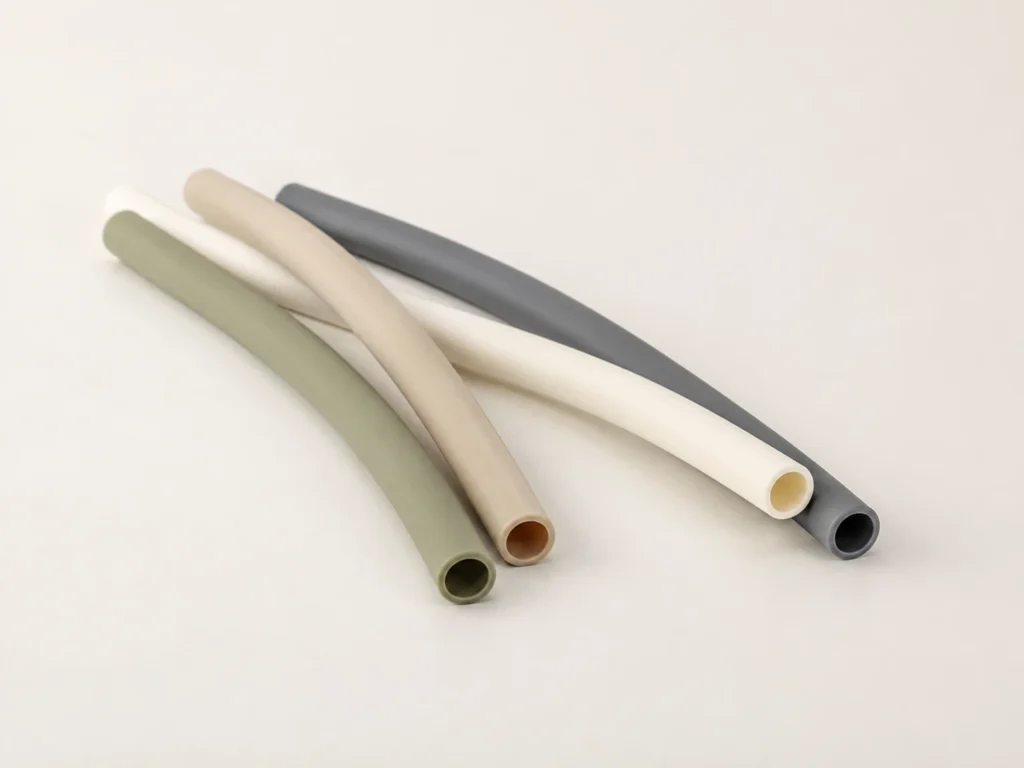
Why it fits this process: A silicone straw has a hollow circular cross-section that remains constant along its length, making it a natural fit for continuous extrusion. Inner diameter, outer diameter, wall thickness, softness and cut length should be defined together, with the material and supporting documents selected according to the intended contact requirements.
Custom D-Shaped & U-Shaped Silicone Profiles

Custom D-Shaped & U-Shaped Silicone Profiles

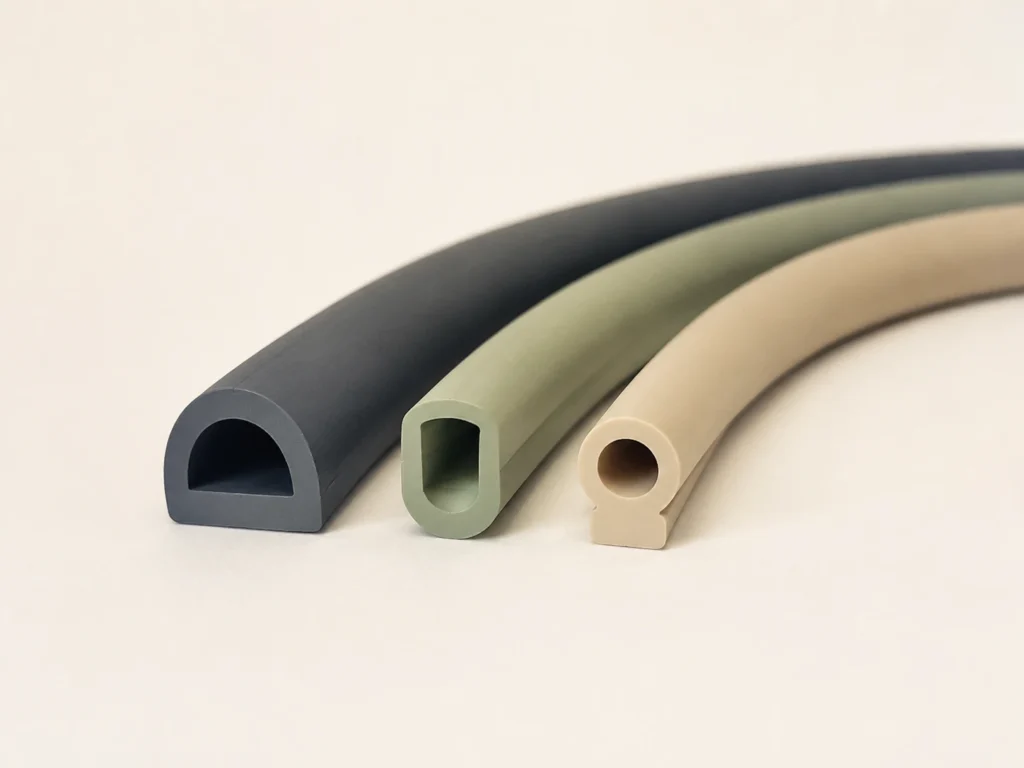
Why it fits this process: A custom die can form continuous D-shaped, U-shaped and other profile sections for cushioning, edge protection or sealing applications. The design should define the installation gap, compression direction, critical contact surfaces and acceptable deformation rather than focusing only on the unloaded profile dimensions.

Silicone Cords, Strips & Continuous-Section Parts

Silicone Cords, Strips & Continuous-Section Parts

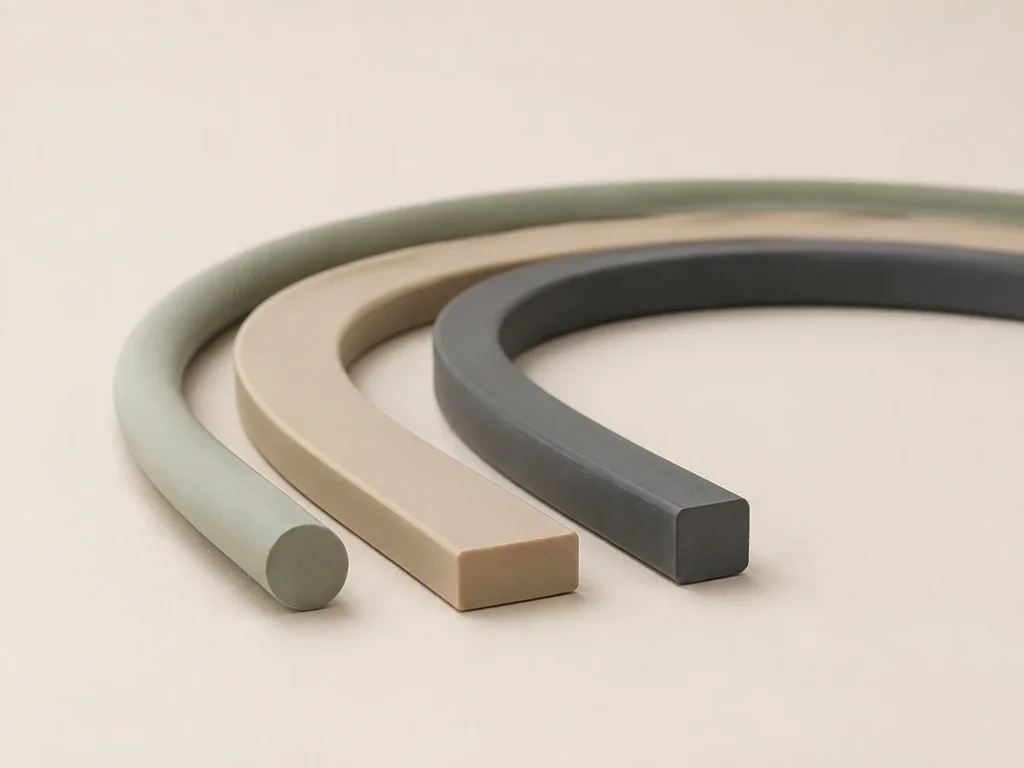
Why it fits this process: Round cords, square cords, flat strips and similar solid sections can be extruded continuously and supplied in defined lengths. Cross-section, hardness, color, cut length and functional requirements can be adjusted around the intended sealing, spacing, cushioning or assembly use.

Supplier Verification

Silicone Extrusion Capabilities

Review the confirmed manufacturing resources and project parameters available for this process.

Dimensional Tolerance
In-line Laser Monitoring (Standard ±0.1mm to ±0.2mm)
Curing Technology
100% Platinum-Cured (Zero Odor, High Clarity)
Material Grade
FDA, LFGB, USP Class VI, RoHS, REACH Compliant
Cross-Section Types
Tubing (ID/OD), Solid Cords, Custom Profiles (T, U, E, P shapes)
Post-Processing
Precision Cut-to-Length, Hot-Vulcanized Splicing (O-Rings)
Manufacturing Workflow

How Silicone Extrusion Works

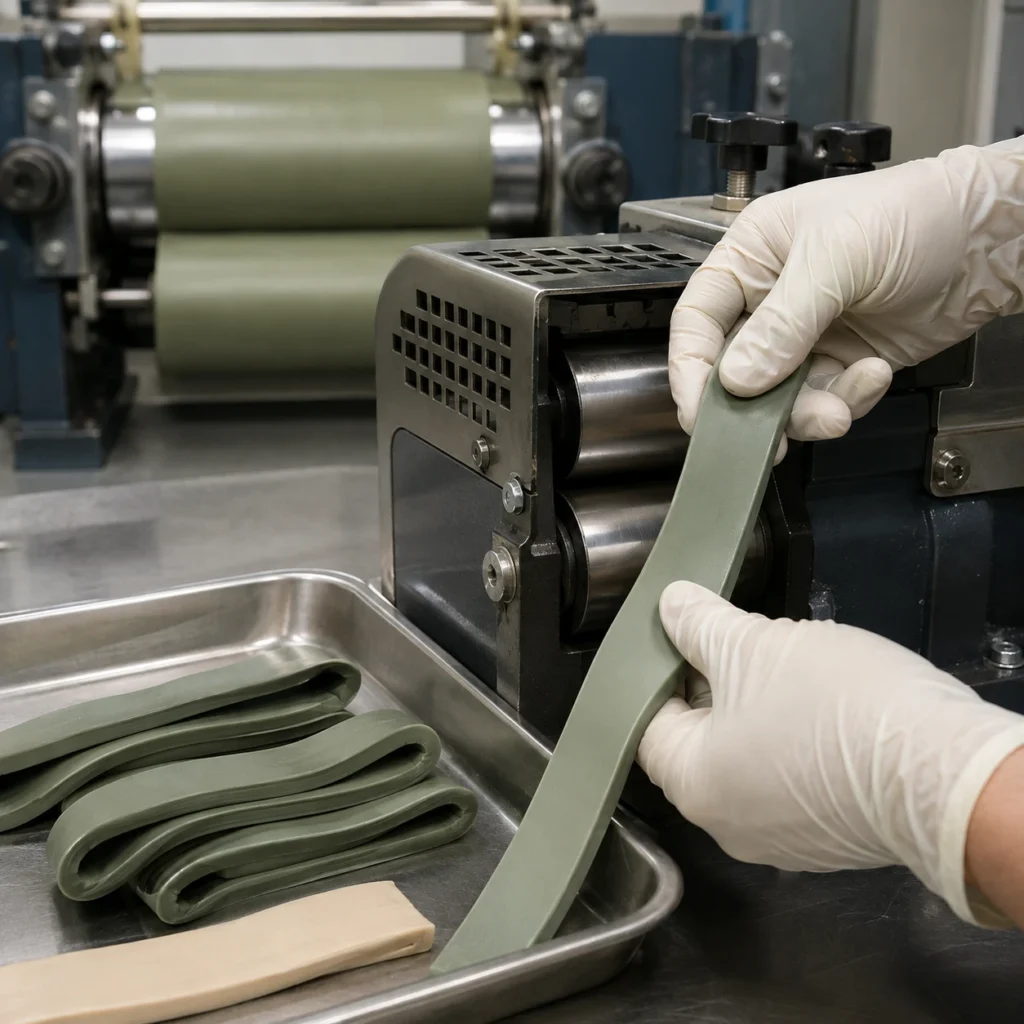
Silicone Mixing, Color Matching & Material Feeding

Silicone Mixing, Color Matching & Material Feeding

Extrusion-grade silicone is prepared with the required curing system and approved pigment. The compound is mixed until its material and color are uniform, then supplied continuously to the extrusion equipment under controlled conditions.

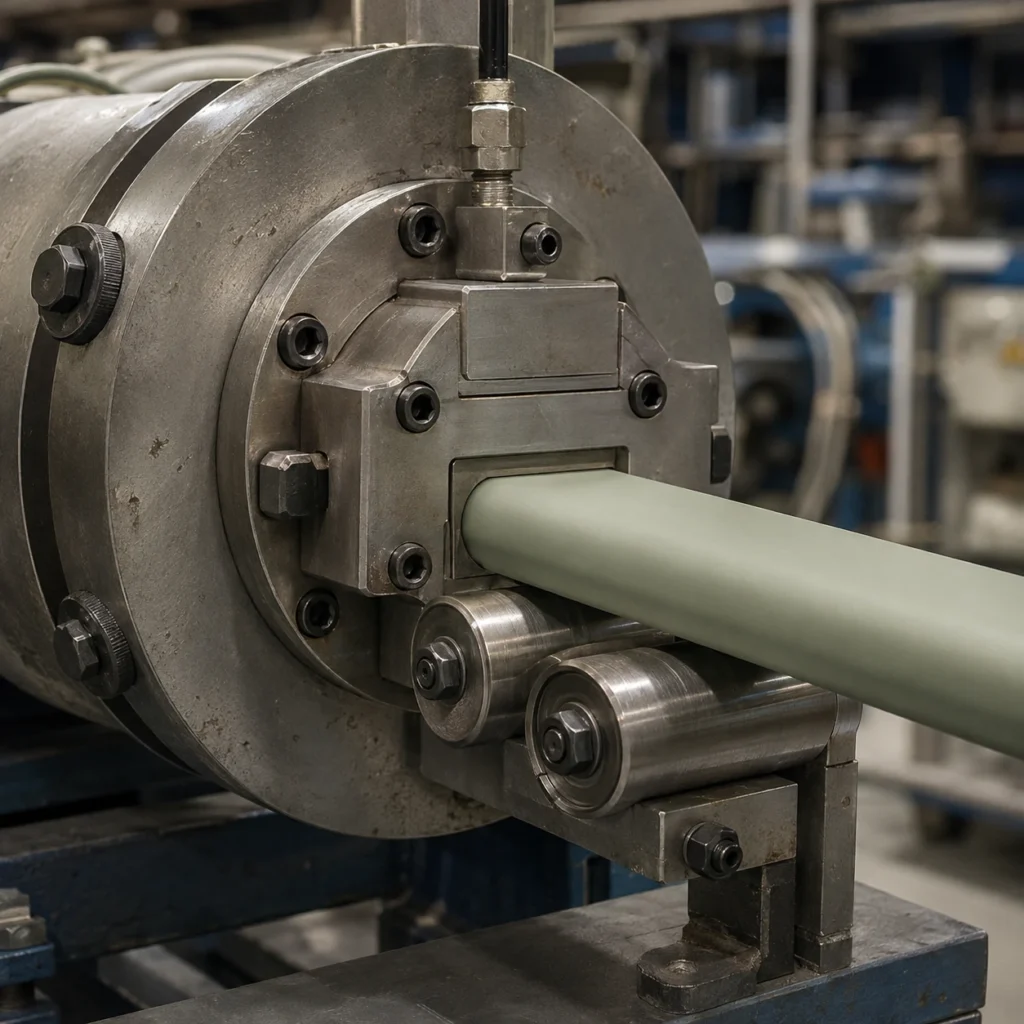
Screw Extrusion & Custom Die Forming

Screw Extrusion & Custom Die Forming

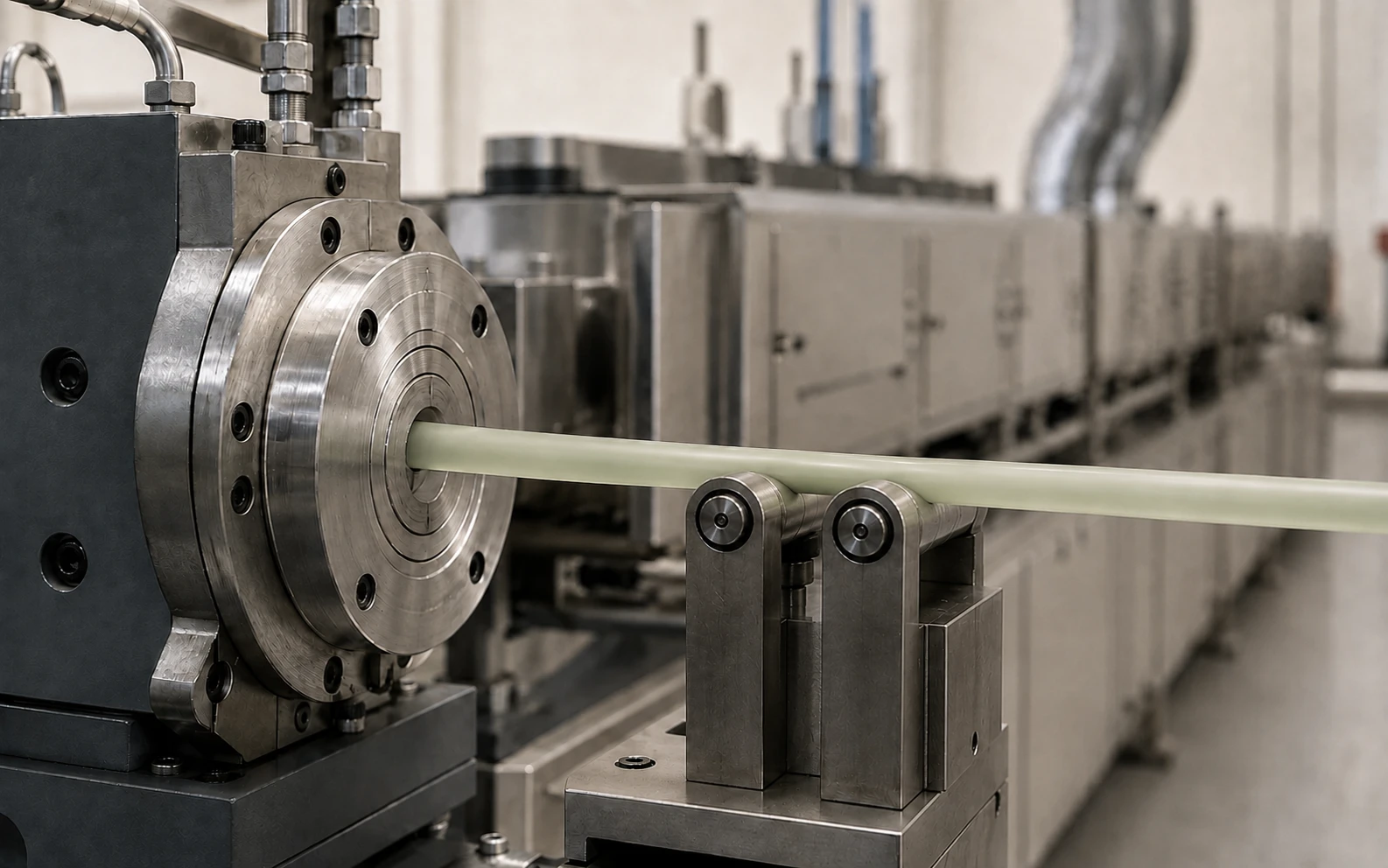
The screw advances the silicone compound through a custom-shaped die, forming a continuous uncured tube, cord, strip or profile. Material feed, screw speed and die design are coordinated to maintain the intended cross-section before curing.

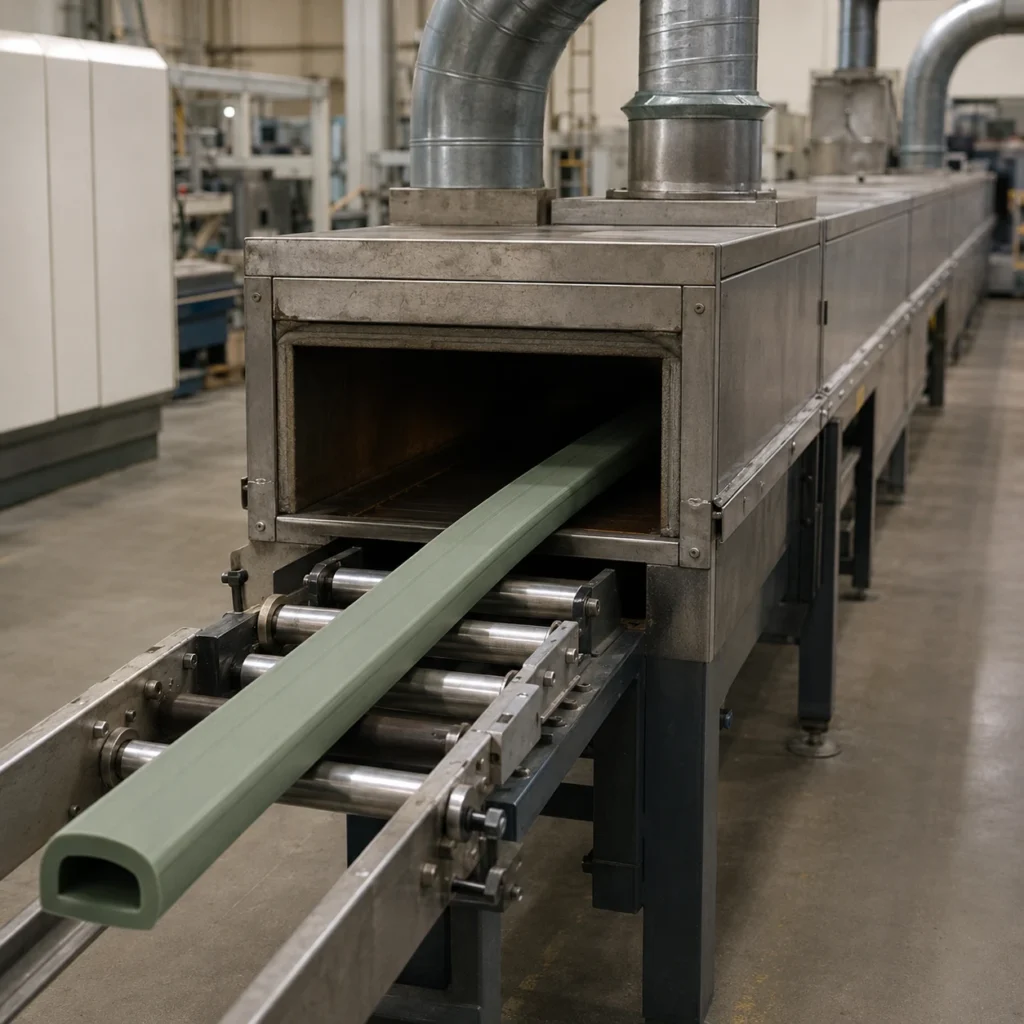
Continuous Vulcanization

Continuous Vulcanization

The extruded silicone passes continuously through a hot-air curing line or another suitable vulcanization system. Curing conditions and line speed are controlled so the profile develops its final elastomeric properties without excessive distortion or incomplete cure.

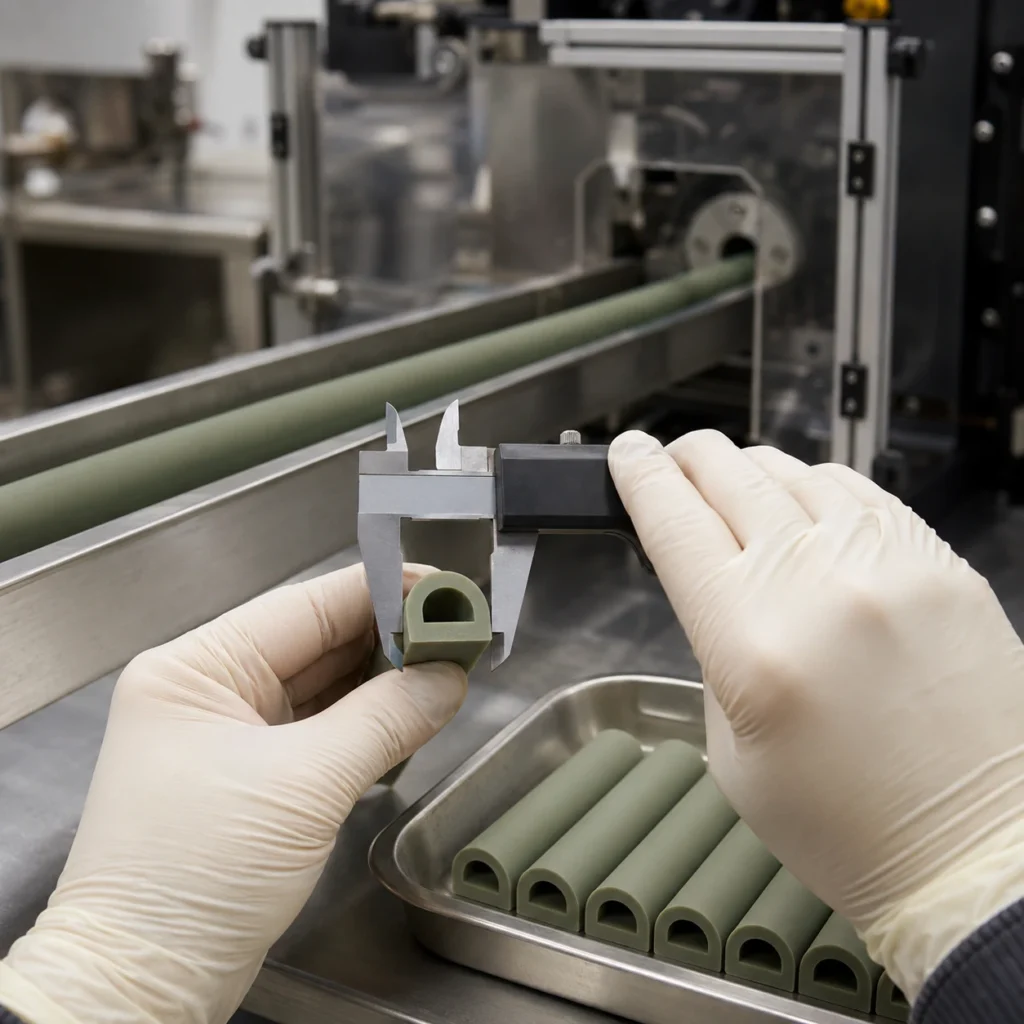
Cooling, Cutting & Dimensional Inspection

Cooling, Cutting & Dimensional Inspection

After curing, the silicone profile is cooled under controlled conditions and cut to the approved length when required. Cross-sectional dimensions, wall thickness, inner and outer dimensions, cut length and visible surface condition are then checked against the defined requirements.

Buyer Questions

Frequently Asked Questions

Start Your Silicone Project

Not Sure Whether Silicone Extrusion Fits Your Product?

Share your drawing, reference image or sample, application requirements, material or performance priorities, expected quantity range, and other relevant project requirements. We will review the information and discuss the next suitable step.

Explore Yushineon's OEM/ODM project process