
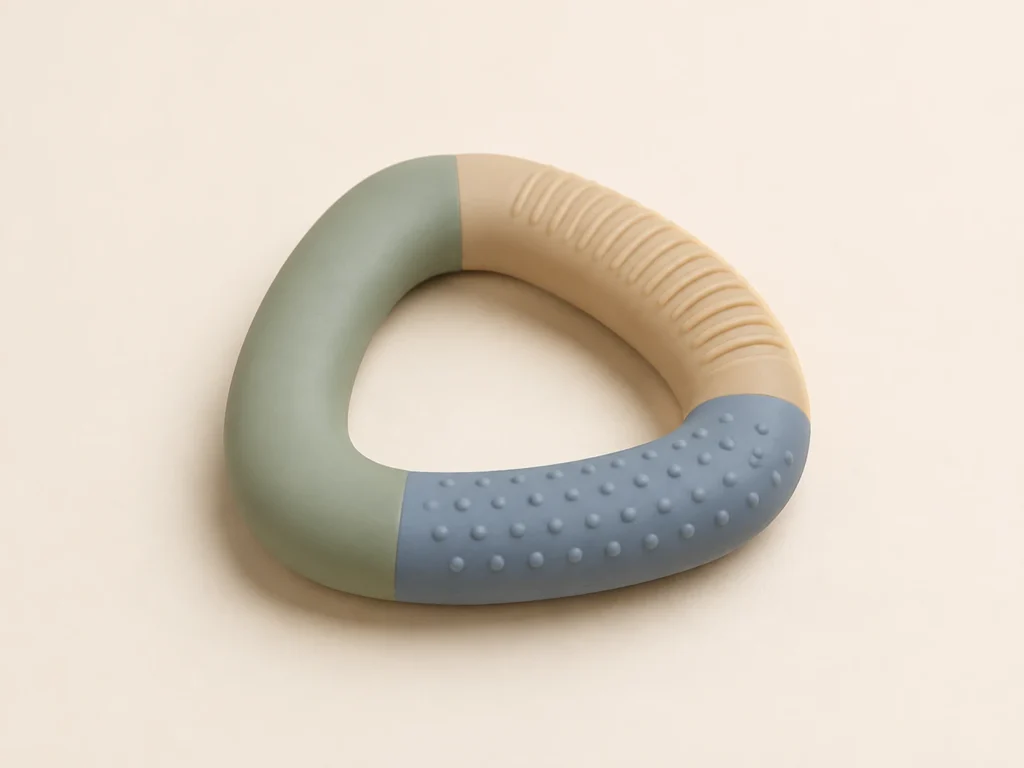
Multi-Color Silicone Teethers
Why it fits this process: Multi-color molding can divide a teether into distinct visual and textured zones while keeping the product as one integrated silicone component.
Press Enter to search · Esc to close
Multi-color silicone molding integrates two or more differently colored silicone regions into one molded part. We deliver vibrant, fade-proof aesthetics with zero toxic inks, ensuring 100% food-grade safety and flawless color boundaries.
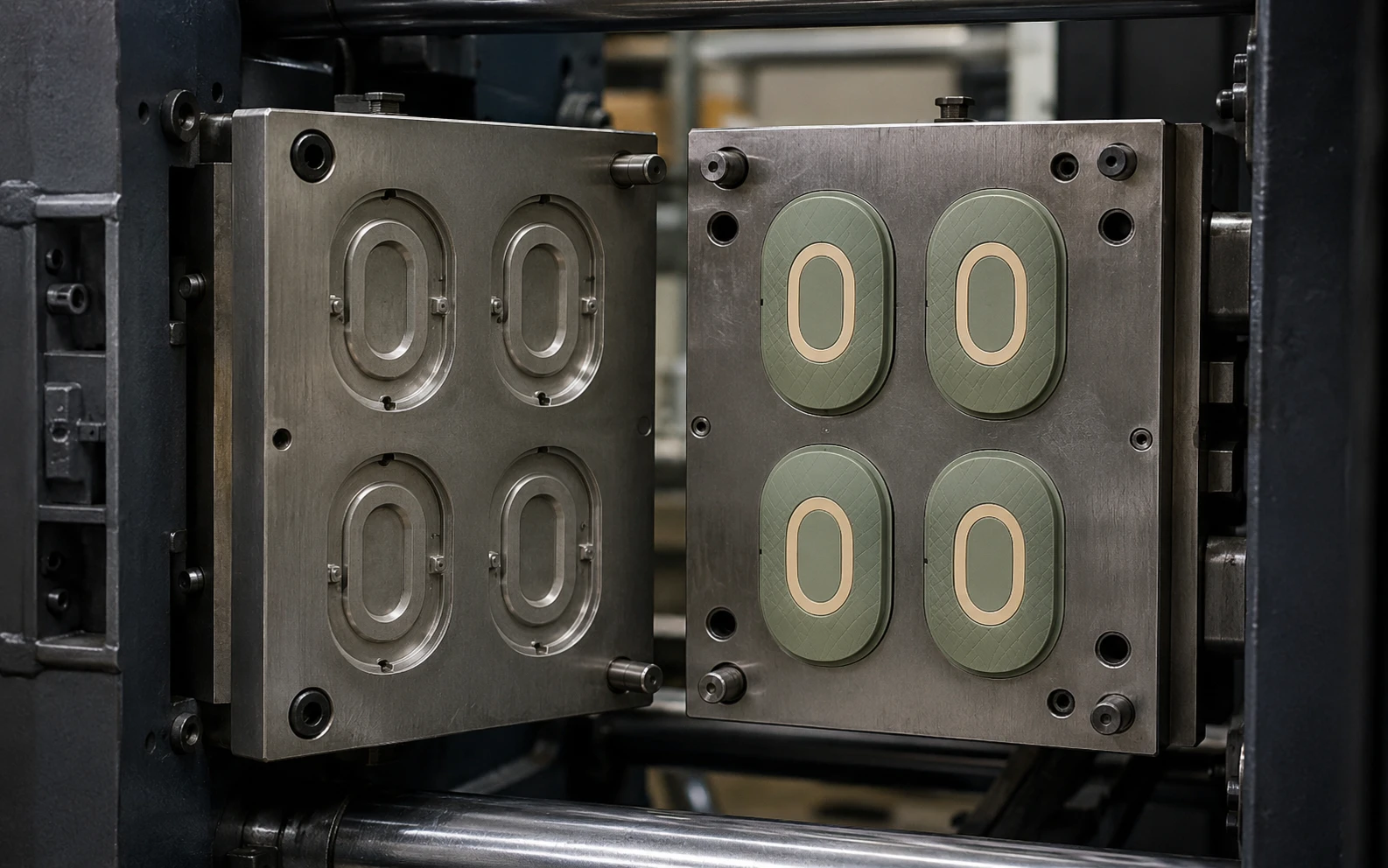
Choose multi-color silicone molding when color placement is part of the product’s molded design and must follow defined boundaries across the same silicone component. Process fit depends on the number and size of the color zones, first-color positioning, interface geometry, material compatibility, curing sequence and acceptable visual variation. If the requirement is only a small logo, fine graphic or shallow surface decoration, silicone micro-dispensing or printing may be more practical. If silicone is being combined with a plastic or metal substrate, the project belongs under silicone overmolding instead.
Compare All Silicone Manufacturing ProcessesIntegrated Color Zones. Different silicone colors are formed as part of one molded component, reducing the need for separately molded color pieces or additional assembly.
More Complex Tooling & Process Sequencing. Each color region requires controlled placement, cavity design and molding sequence. Additional colors generally increase tooling and process complexity.
Color Is Built into the Silicone. Because the color region is made from pigmented silicone rather than a surface-only print, the visual design extends through the molded material.
Boundary & Misalignment Risks. Material movement, incorrect first-color positioning or uncontrolled second-color flow can cause blurred boundaries, uneven overlap, gaps or visible color displacement.
Stronger Visual Differentiation. Multiple molded colors can separate functional zones, emphasize textures and create a more recognizable product appearance without relying only on printed decoration.
Final Color Requires Physical Approval. Silicone grade, pigment, thickness, surface texture, curing and lighting can affect perceived color. Digital references alone cannot guarantee the appearance of the molded part.
These examples connect product structure and requirements to this manufacturing route.
Why it fits this process: Multi-color molding can divide a teether into distinct visual and textured zones while keeping the product as one integrated silicone component.
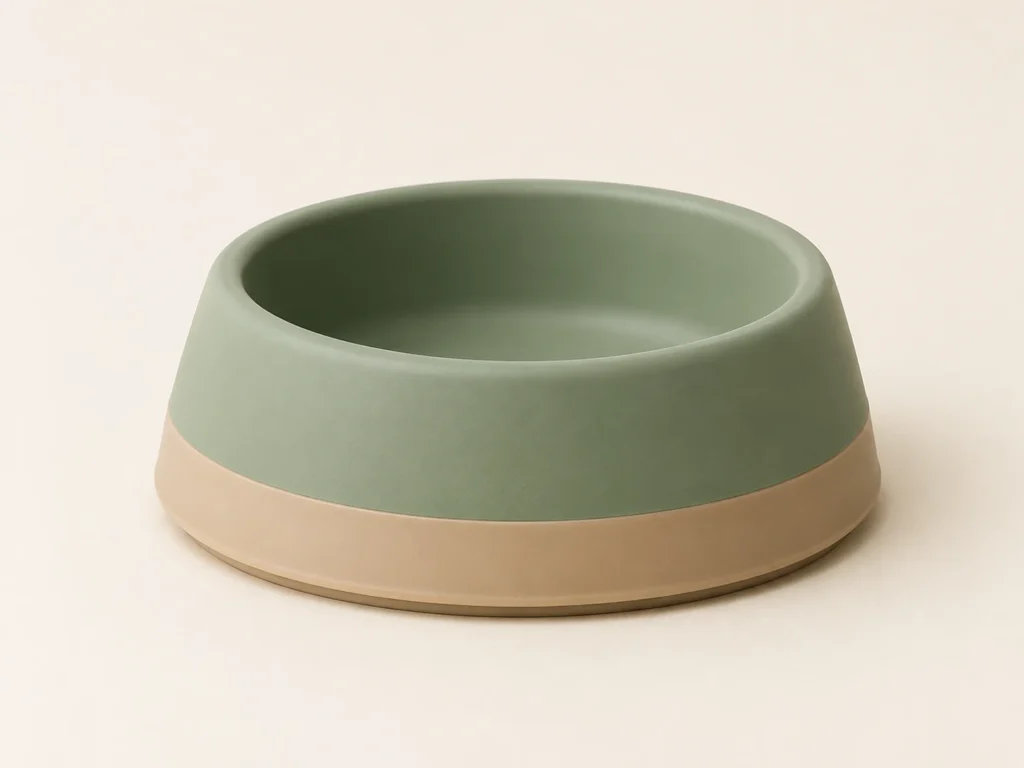
Why it fits this process: A bowl body, base or raised feature can be formed in contrasting silicone colors without adding a separately assembled decorative ring.
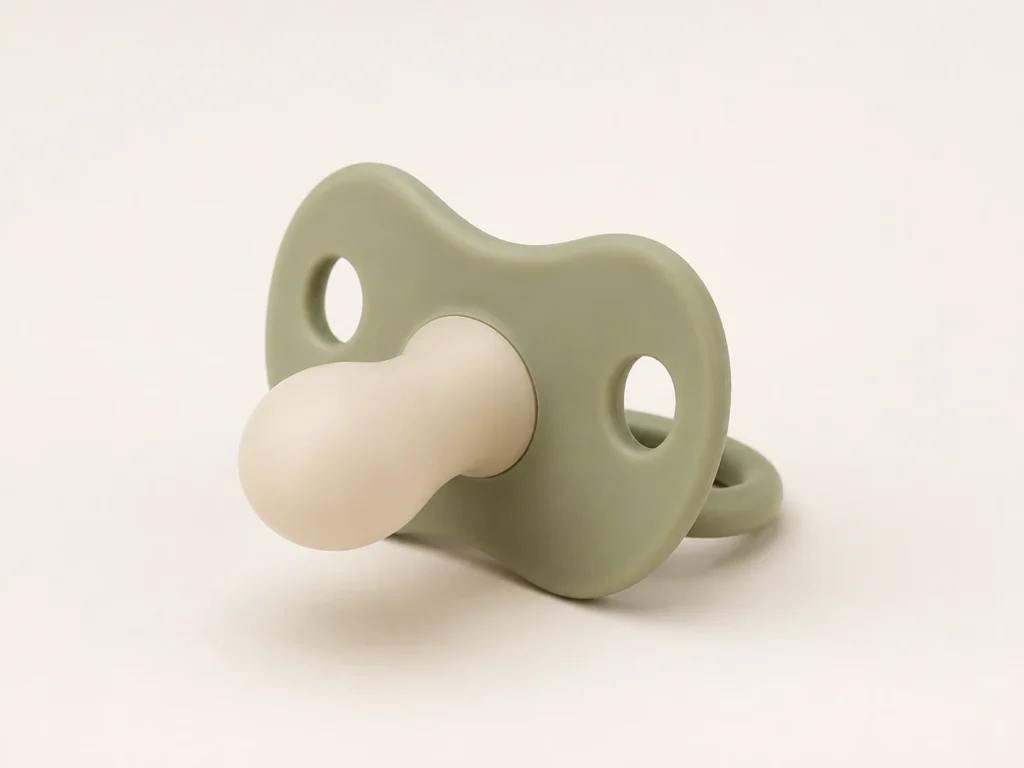
Why it fits this process: Demands strict hygienic integration. The two-tone design is fused seamlessly in the mold, leaving no microscopic gaps or glue lines for bacteria to hide, unlike parts that are mechanically assembled.
Review the confirmed manufacturing resources and project parameters available for this process.
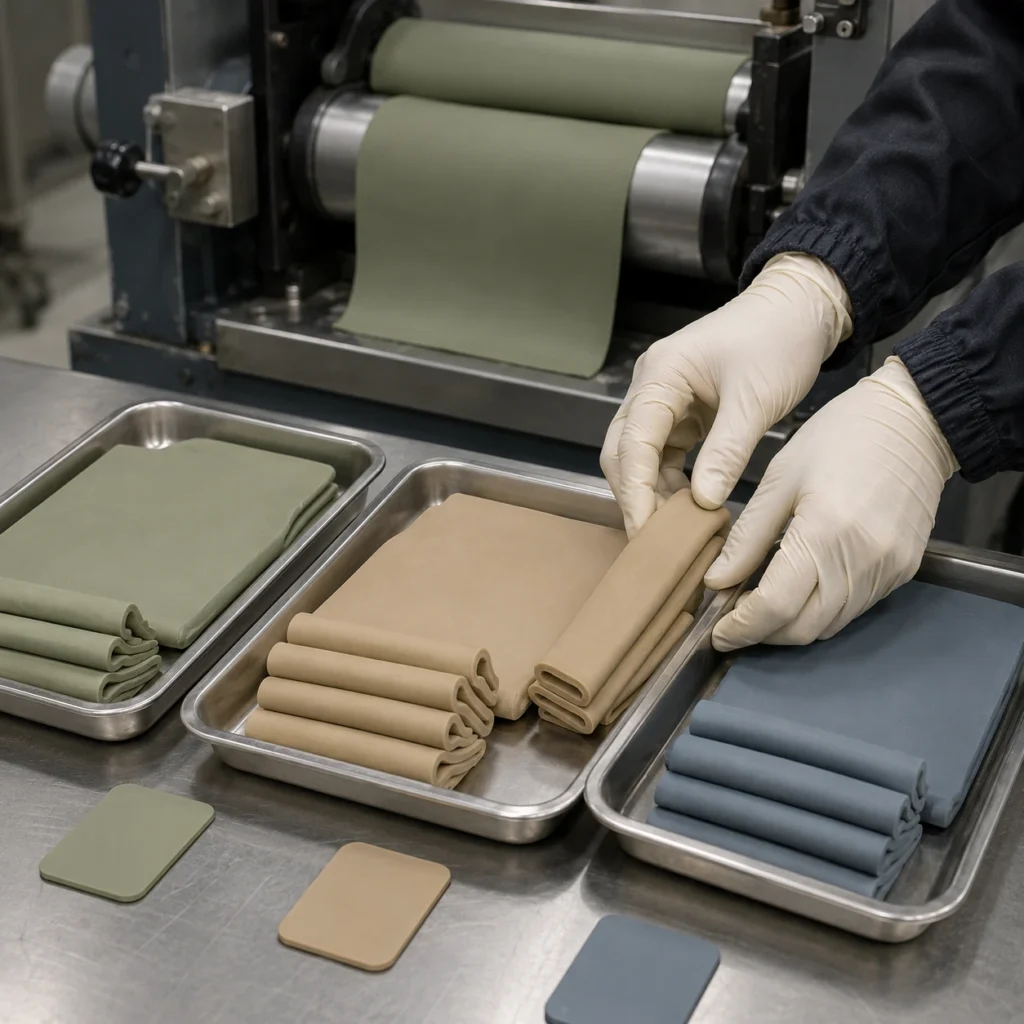
Silicone materials for each color region are prepared separately using the approved color references and applicable material formulation. Mixing, identification and material handling are controlled to maintain uniform color and reduce cross-contamination between batches.
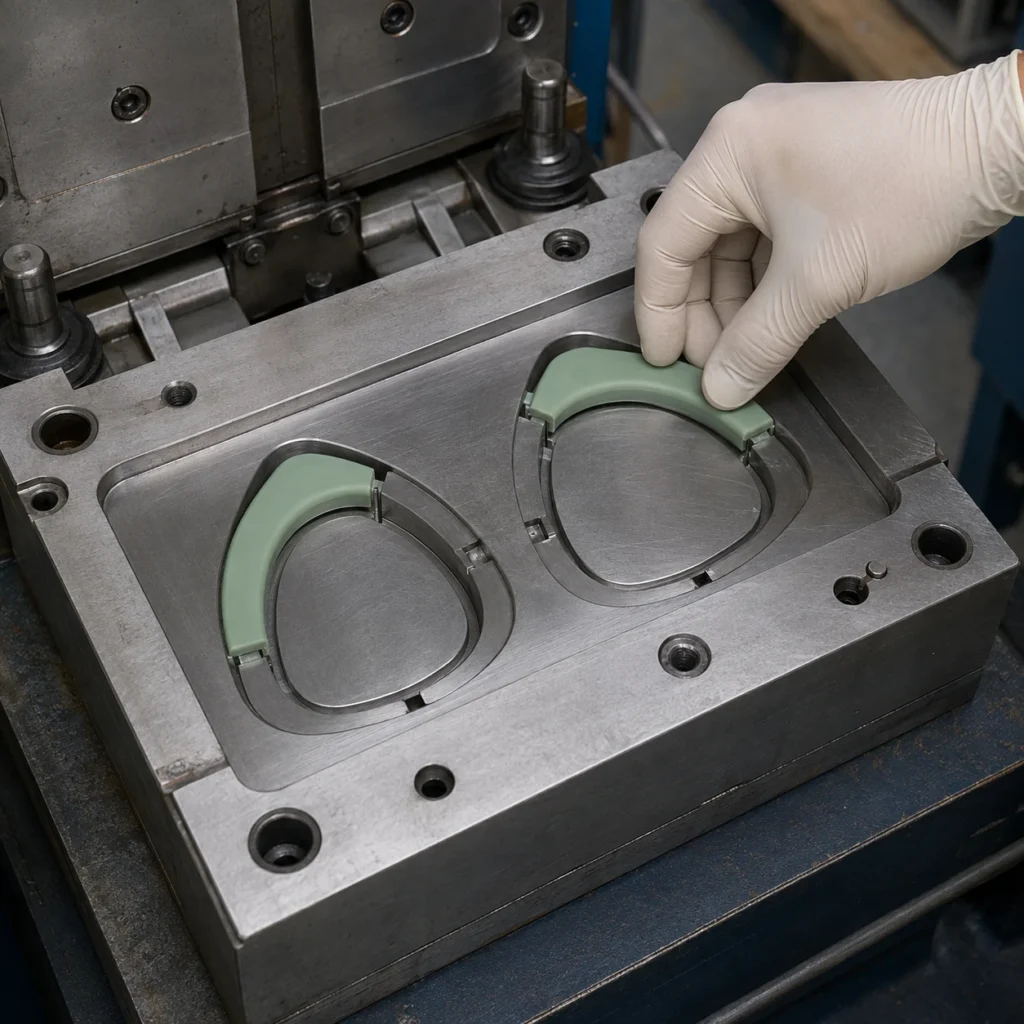
The first-color silicone region is preformed or placed in the defined mold position. Its orientation, shape and stability are checked so it remains within the intended boundary during the next molding stage.
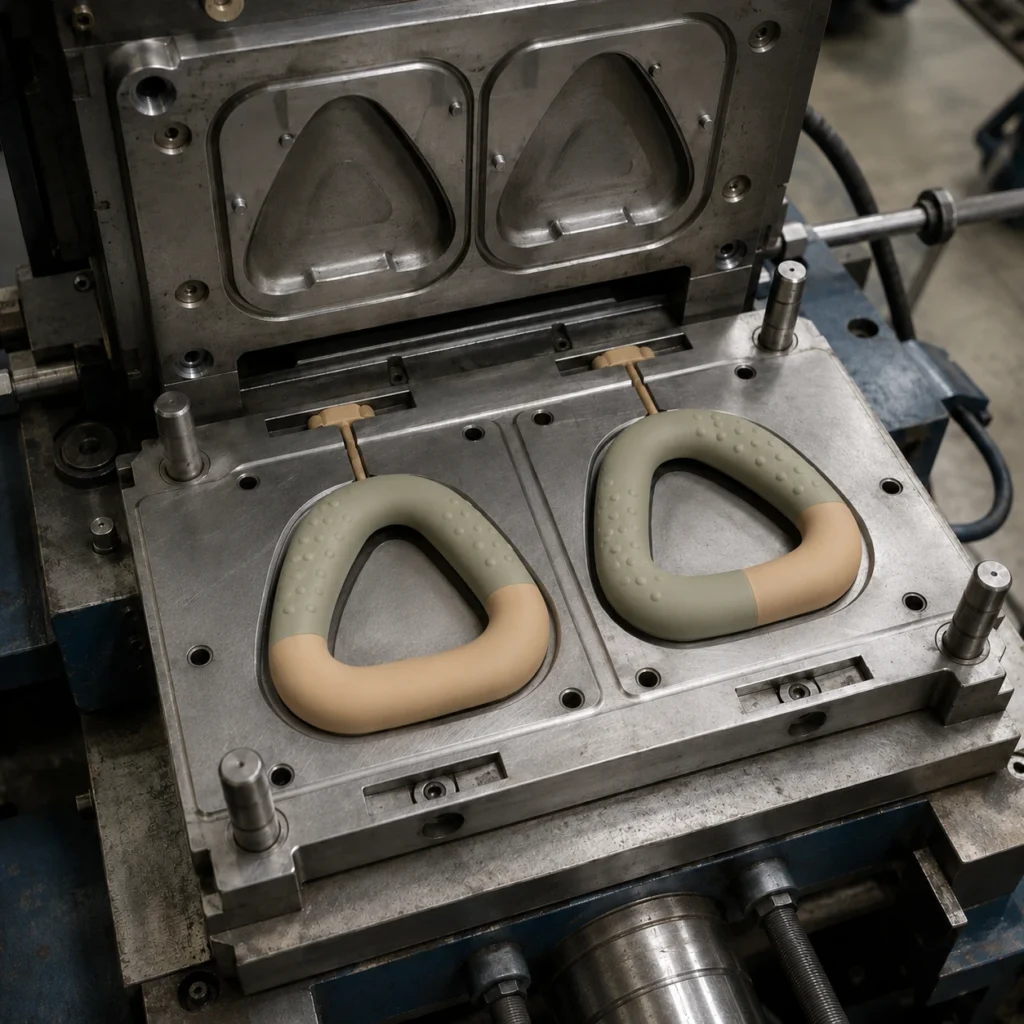
The second-color silicone is molded into the remaining cavity and integrated with the first-color region under controlled pressure, temperature and curing conditions. Material flow and interface geometry are managed to reduce displacement, gaps and unintended color overlap.
After curing, the part is demolded and inspected for color-boundary definition, region placement, contamination, color transfer, gaps, incomplete filling and visible misalignment. Additional dimensional or functional checks are performed when defined by the approved project requirements.
Surface printing (silk-screen or pad printing) is prone to wear, especially in high-friction sports gear or dishwashed pet supplies. Co-molding integrates the color directly into the silicone body, ensuring a lifetime of vibrancy that complies with food-grade standards without any ink chipping.
The color regions are intended to integrate during molding, but successful integration depends on compatible silicone compounds, surface cleanliness, first-color condition, interface geometry and the curing sequence. Contamination, excessive curing of the first region, poor material compatibility or insufficient interface design can increase separation risk. The selected material combination and molding sequence should therefore be validated before production.
Absolutely. While co-molding usually separates colors with sharp boundaries, we can intentionally twist and fold differently colored silicone blanks together before pressing them. This creates beautiful, random marble or camouflage patterns where no two products are exactly alike.
Yes. The different colored silicone materials vulcanize (cure) at the exact same time under high heat and pressure. They undergo a chemical cross-linking process, fusing them into one continuous, unbreakable molecular structure.
Multi-color silicone molding is best suited to products that require two or more clearly defined color regions within one molded silicone component. Typical applications include teethers, pacifiers, bowls, grips and beauty or pet products where color placement is part of the molded design rather than a surface-only decoration.
Color should be approved using a cured physical sample because silicone grade, pigment, thickness, surface texture, curing and lighting can change its appearance. Color-boundary approval should identify the intended boundary position, acceptable transition area and critical visual surfaces. Digital color values or screen images alone should not be treated as final molded-color approval.
Share your drawing, reference image or sample, application requirements, material or performance priorities, expected quantity range, and other relevant project requirements. We will review the information and discuss the next suitable step.
Explore Yushineon's OEM/ODM project process