
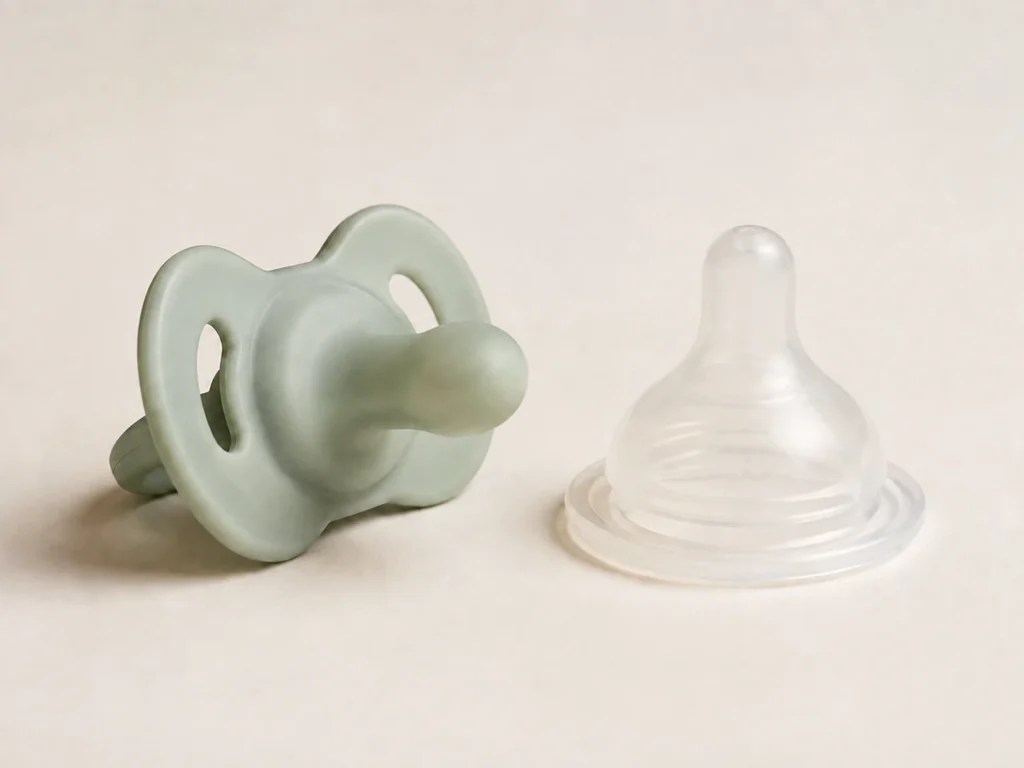
Bottle Nipples & Baby Pacifiers
Why it fits this process: Demands absolute purity. LSR’s closed-loop platinum curing guarantees a 100% BPA-free, odorless, and highly bite-resistant safety standard for infant care.
Press Enter to search · Esc to close
Liquid silicone rubber (LSR) injection molding is an automated process for complex, thin-walled silicone parts that require repeatable dimensions and consistent material performance. It is best suited to projects with a stable design and repeat demand that can justify dedicated precision tooling.
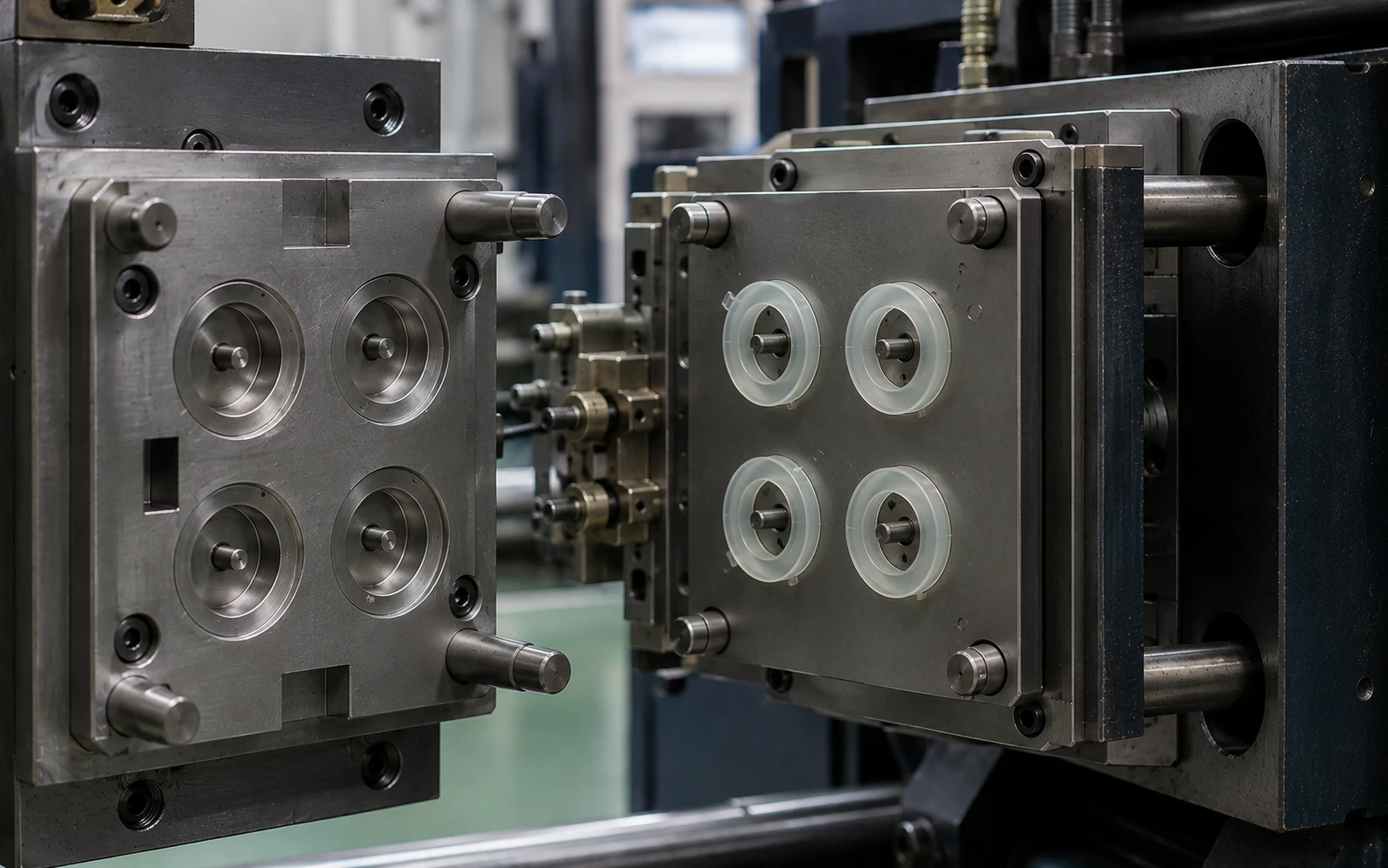
Choose LSR injection molding when your part includes thin sections, fine textures, flexible sealing lips, small undercuts or intricate geometry that must be reproduced consistently. Metered A/B material delivery, injection into a heated mold and controlled curing support repeat production of baby-care components, facial cleansing brush heads, valves and seals. If the part is simple, thick-walled, required only in low volumes or likely to change after sampling, silicone compression molding may offer a more economical starting route.
Compare All Silicone Manufacturing ProcessesComplex Geometry & Thin-Wall Filling. Low-viscosity LSR can fill fine textures, thin membranes, sealing lips and intricate mold features that are difficult to reproduce consistently with higher-viscosity silicone compounds.
Higher Initial Tooling Investment Precision shutoffs, venting, temperature control and cold-runner components generally make LSR tooling more expensive than a simpler silicone compression mold.
Repeatability & Scalable Automation. Automated metering, mixing, injection and curing support stable cycle-to-cycle consistency and efficient repeat production once the part and process are validated.
Not Ideal for Low-Volume Runs Due to the expensive machine setup time and material purging processes, small-batch prototyping (e.g., under 3,000 pcs) is rarely cost-effective.
Controlled Material Handling Metered A/B delivery and enclosed material transfer help limit handling variation and contamination risk while supporting consistent color and cured-part performance.
Irreversible Mold Modifications Liquid silicone requires microscopic mold seals. Once the steel is cut, modifying the design or dimensions is extremely difficult and costly.
These examples connect product structure and requirements to this manufacturing route.
Why it fits this process: Demands absolute purity. LSR’s closed-loop platinum curing guarantees a 100% BPA-free, odorless, and highly bite-resistant safety standard for infant care.
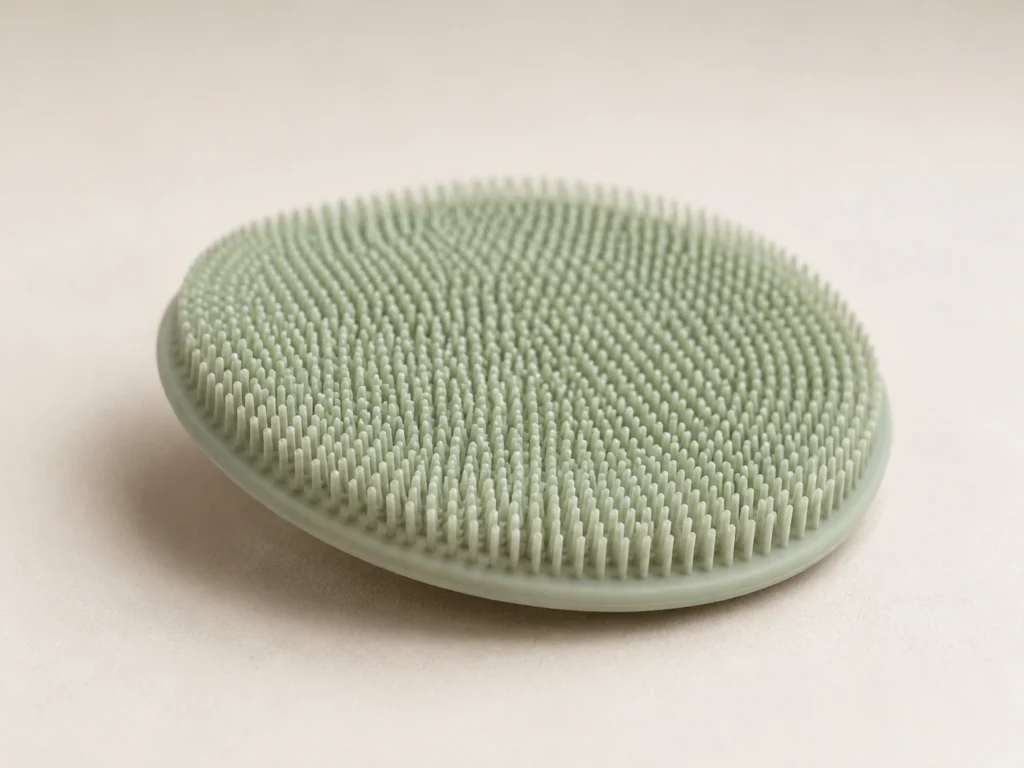
Why it fits this process: Requires an ultra-soft tactile feel without sharp parting lines. LSR’s high flowability perfectly fills 0.5mm micro-bristle cavities without causing flashing.
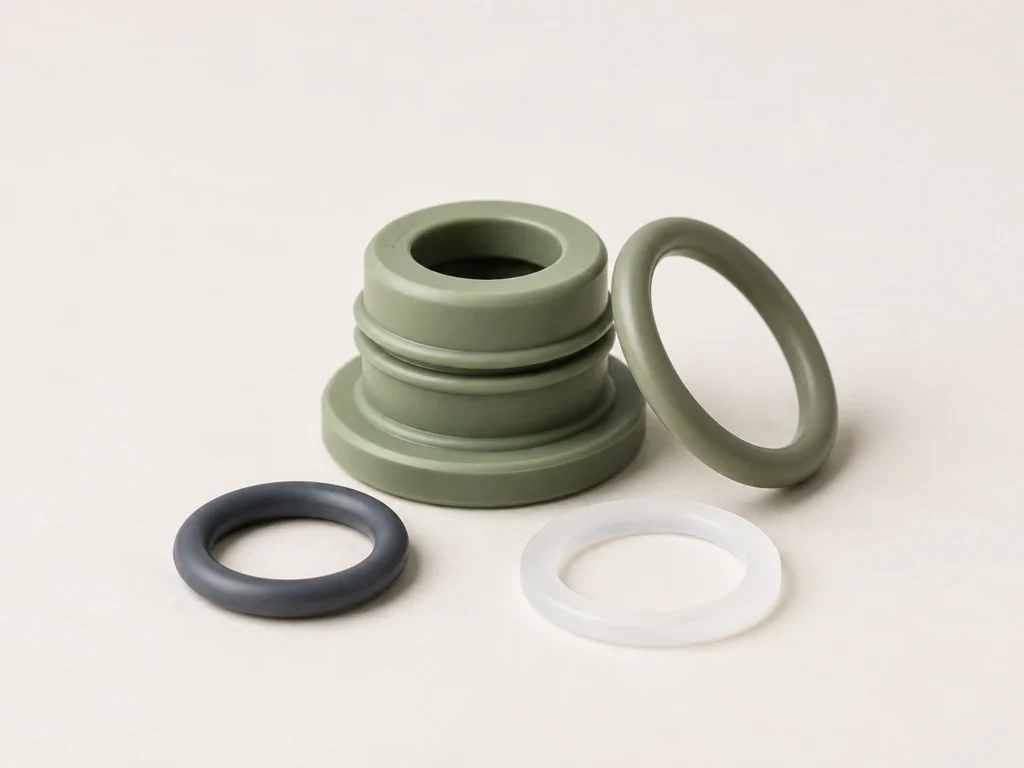
Why it fits this process: LSR can form thin membranes, flexible valve features, O-rings and sealing lips with repeatable dimensions. Suitable material grades support applications that require elasticity, temperature resistance and dependable sealing performance.
Review the confirmed manufacturing resources and project parameters available for this process.
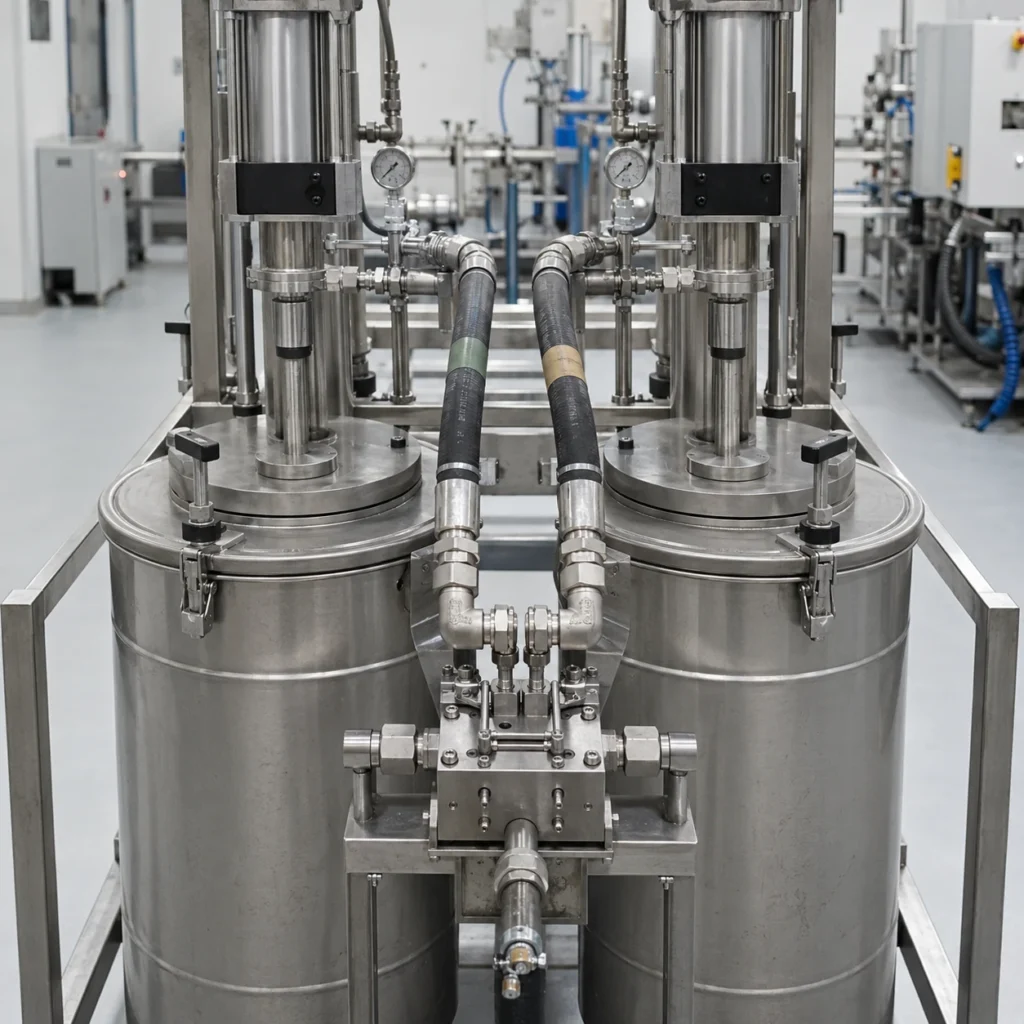
Part A and Part B LSR are pumped from separate containers, metered at the specified ratio and mixed before entering the injection unit. Approved color masterbatch or additives can be introduced according to the material and product specification.
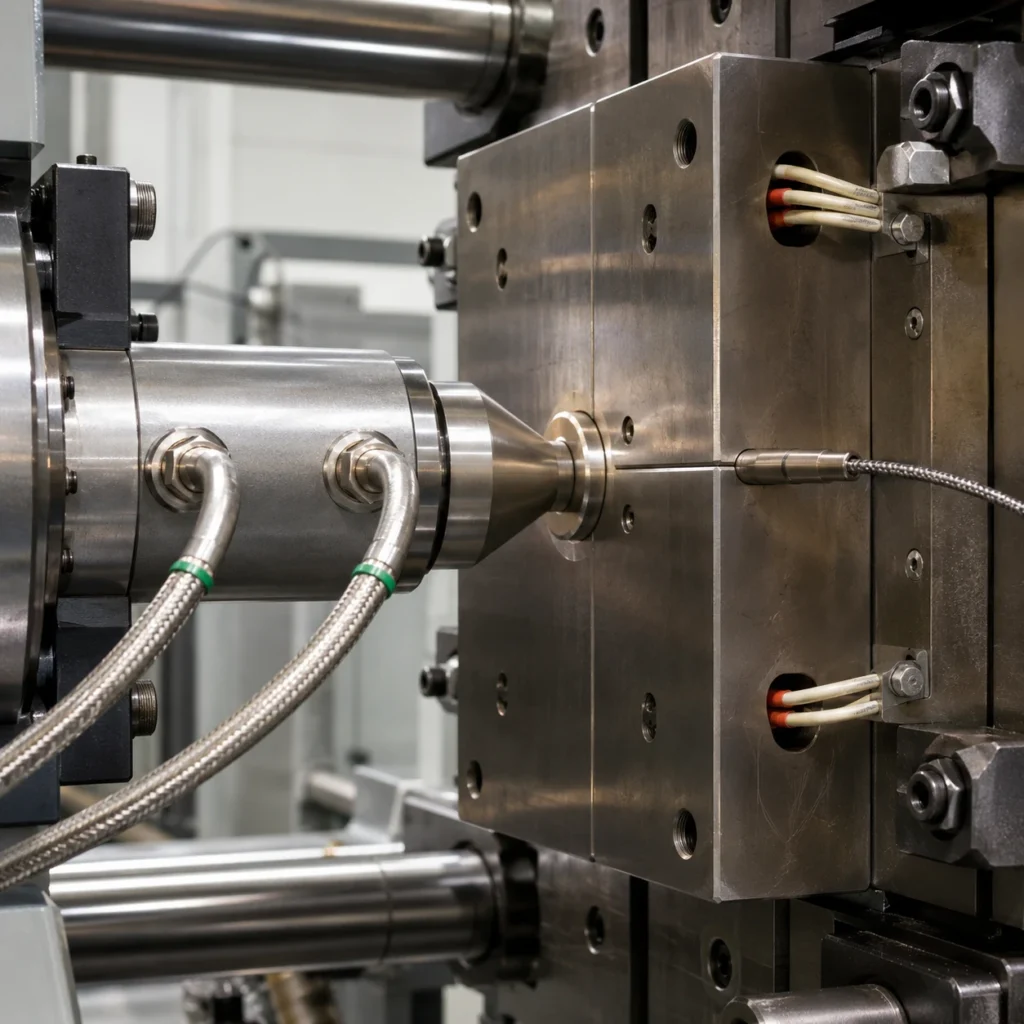
The mixed LSR passes through a cooled injection nozzle into the heated mold. Controlled injection pressure, speed and mold venting help fill thin sections, fine features and sealing geometry while limiting trapped air and excess flash.
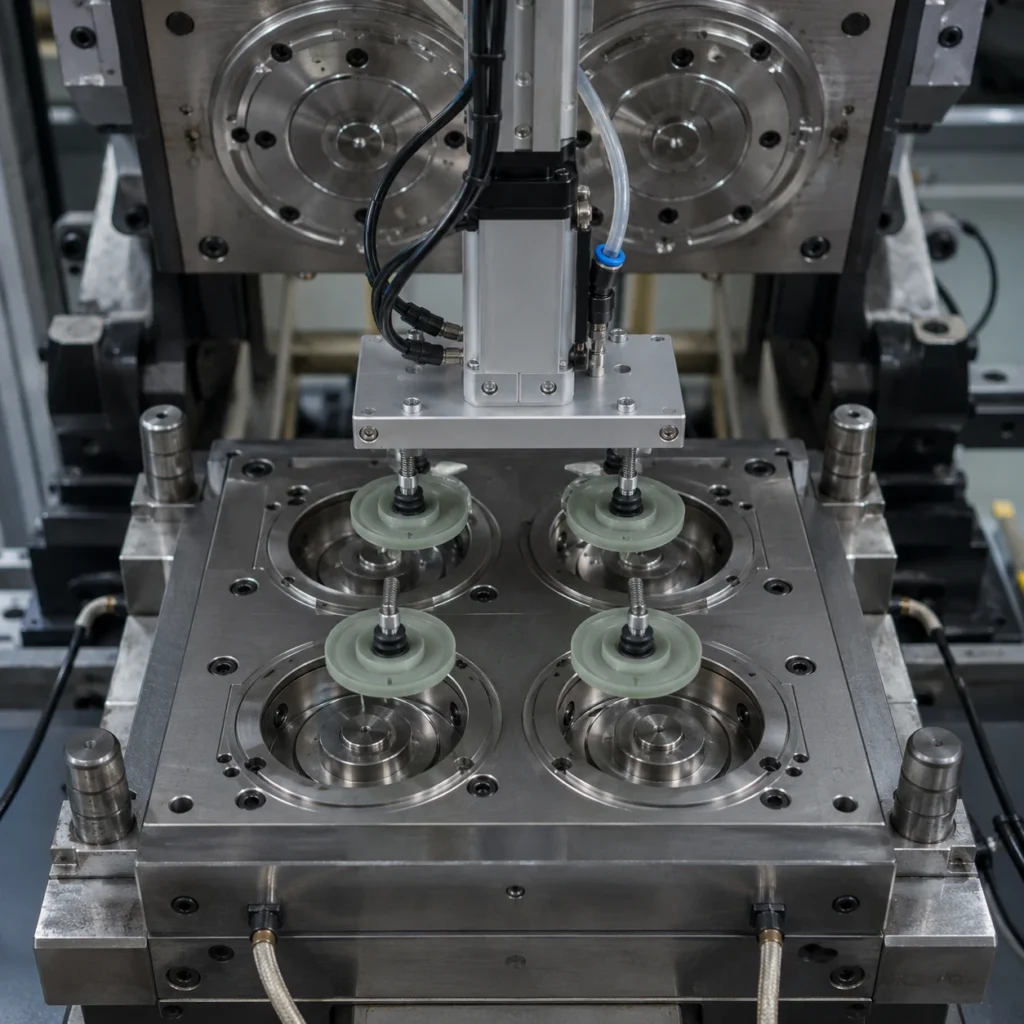
Heat activates the curing reaction and forms the LSR into its final elastomeric shape. After the specified cure time, the mold opens and parts are removed automatically or with assisted demolding, depending on part geometry.
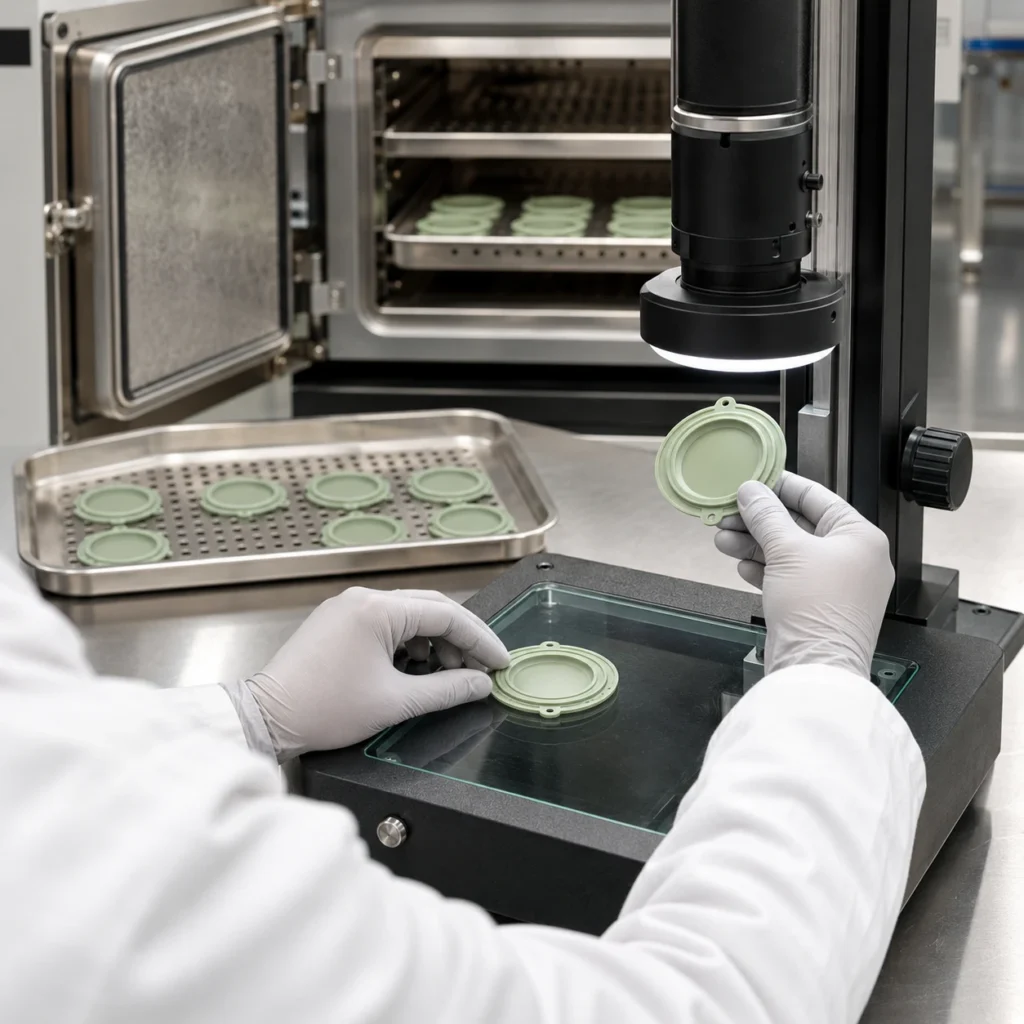
Parts undergo secondary vulcanization (post-curing baking) to completely eliminate any volatile organic compounds (VOCs). Finally, every unit undergoes strict piece-by-piece visual and dimensional inspections to guarantee zero defects before shipment.
Standard LSR mold design and high-precision CNC machining take approximately 50 to 60 working days. Once the First Article Inspection (FAI) sample is approved, mass production typically requires 30 days depending on your order volume.
Absolutely. We work extensively with global brand innovators and understand the critical nature of IP protection. We sign a strict Non-Disclosure Agreement (NDA) before you even share your 3D CAD files.
The necessity for cold-runner systems and hardened CNC steel blocks. However, this precision creates zero-flash parts, saving massive manual deflashing labor costs in the long run.
Yes. We offer precise Pantone color matching. The color pigment is seamlessly integrated during the closed-loop mixing phase, ensuring vibrant, non-fading, and highly consistent colors across every single batch.
Yes, exceptional clarity is a signature advantage of our LSR. We utilize premium platinum-cured optical and food-grade liquid silicone, which delivers up to 93% light transmission, far surpassing traditional solid silicone. More importantly, unlike TPU or peroxide-cured silicone, our LSR possesses extreme UV and thermal stability, meaning it will not yellow, cloud, or degrade even when exposed to prolonged sunlight, skin oils, or cosmetics. This makes it ideal for high-end beauty devices and transparent pet feeding components.
Share your drawing, reference image or sample, application requirements, material or performance priorities, expected quantity range, and other relevant project requirements. We will review the information and discuss the next suitable step.
Explore Yushineon's OEM/ODM project process