Silicone Manufacturing Process

Custom Solid Silicone Compression Molding

The highly versatile, cost-effective manufacturing workhorse for thick, durable silicone parts

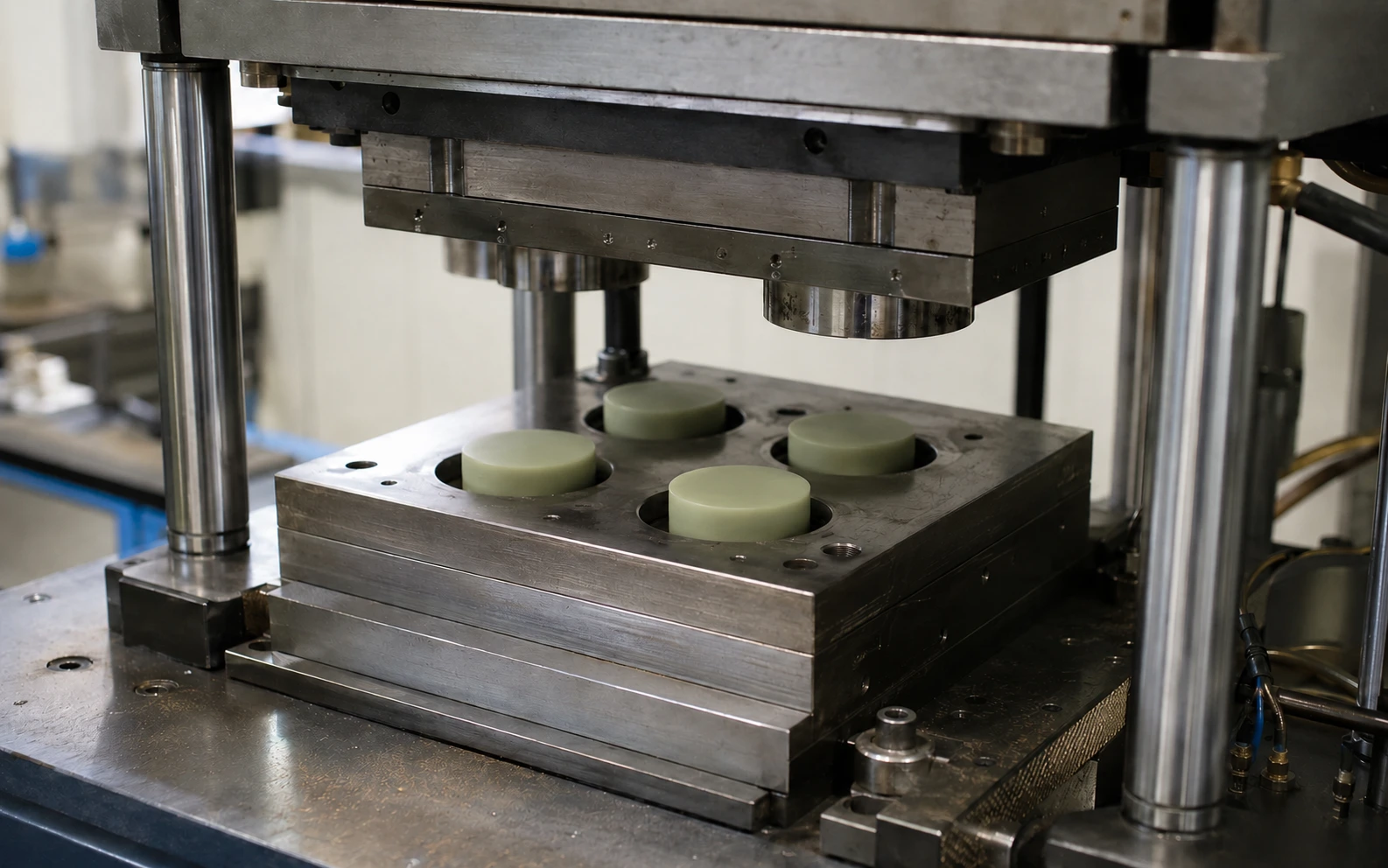
Custom Solid Silicone Compression Molding manufacturing process
Process Fit

Is Silicone Compression Molding Right for Your Product?

Choose silicone compression molding for products with substantial wall sections, broad surfaces, molded textures, embossed or debossed details, and flexible shapes that can be released from an open mold. It is often well suited to silicone hand grip trainers, pet bowls, makeup brush cleaning mats, pads, covers and similar consumer products. Tooling is generally simpler than LSR injection tooling, making compression molding practical for product development and repeat production. LSR may be a better choice for very thin walls, dense micro-features or highly automated high-volume production.

Compare All Silicone Manufacturing Processes
Advantages Trade-offs
Advantage

Practical Tooling Economics Compression molds are generally simpler than precision LSR injection molds, reducing the initial tooling barrier for straightforward solid silicone products.

Trade-off

More Manual Material Handling Preform cutting, weighing, mold loading, demolding and trimming may require more operator involvement, resulting in longer cycles and higher labor content than automated LSR molding.

Advantage

Well Suited to Thicker and Larger Parts Compression molding can form substantial wall sections, broad surfaces, molded textures and one-piece flexible shapes such as grip trainers, bowls and cleaning mats.

Trade-off

Inevitable Parting Line Flash The process naturally creates flash (excess material), requiring skilled manual or cryogenic deflashing to achieve a premium edge.

Advantage

Flexible Color, Hardness and Surface Design Solid silicone compounds can be prepared for project-specific colors and hardness requirements, while the mold can incorporate textures, grip patterns and recessed or raised logos.

Trade-off

Less Suitable for Very Fine Thin-Wall Features Extremely thin membranes, dense micro-features and intricate flow paths can be more difficult to fill consistently than with low-viscosity LSR injection molding.

Typical Applications

Products Best Suited to Silicone Compression Molding

These examples connect product structure and requirements to this manufacturing route.

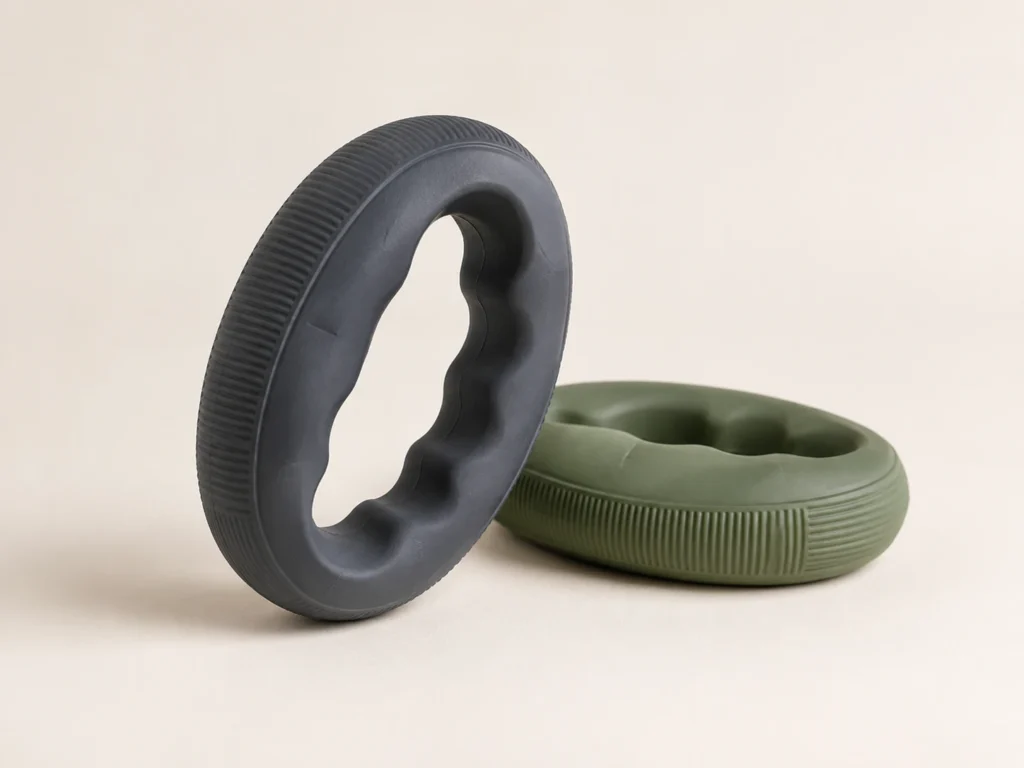
Silicone Hand Grip Trainers

Silicone Hand Grip Trainers

Why it fits this process: Compression molding is well suited to the thick ring geometry, textured gripping surfaces and elastic recovery required by silicone hand grip trainers. Material hardness, dimensions and resistance targets can be reviewed together before tooling to balance hand feel, deformation and repeated use.
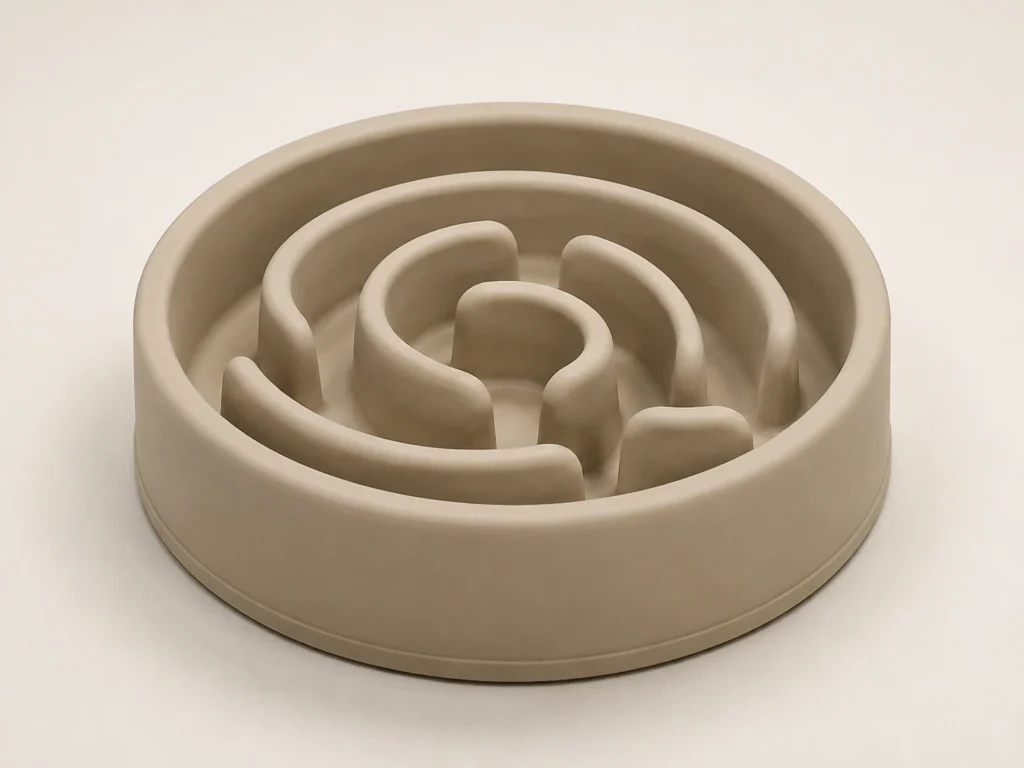
Silicone Slow Feeder Pet Bowls

Silicone Slow Feeder Pet Bowls

Why it fits this process: Requires a large footprint and deep cavities. This process economically molds heavy, food-grade HTV silicone into intricate maze structures, ensuring stability and dishwasher-safe longevity.

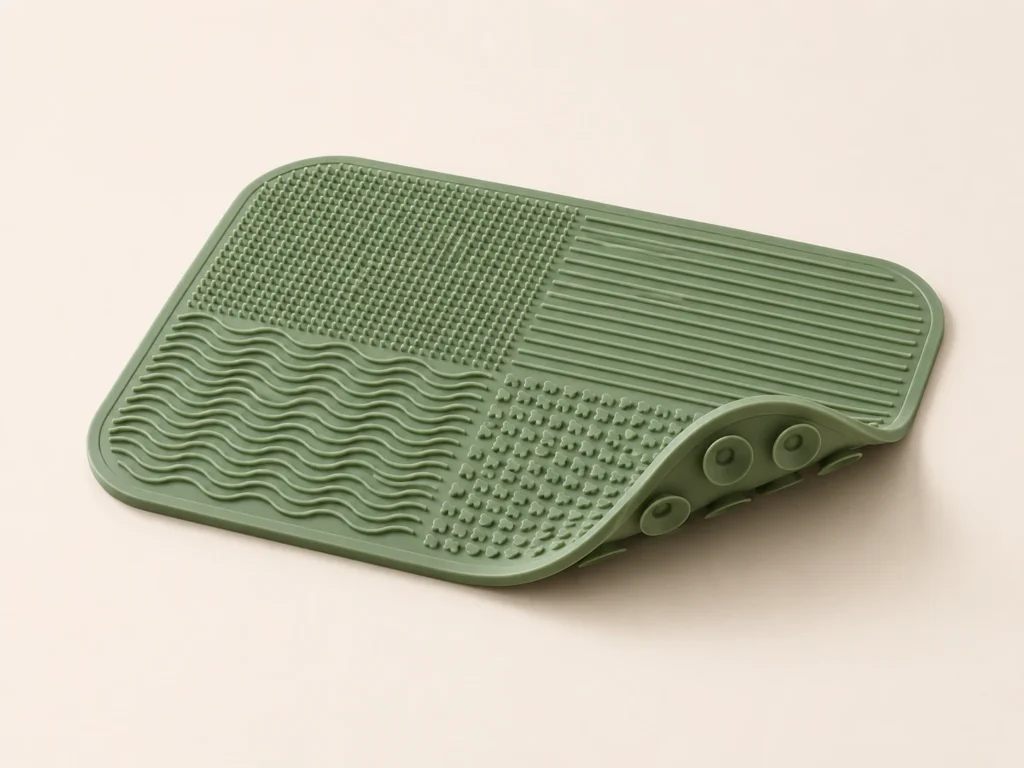
Textured Silicone Makeup Brush Cleaning Mats

Textured Silicone Makeup Brush Cleaning Mats

Why it fits this process: Compression molding can reproduce multiple raised cleaning textures across a broad, flexible surface while maintaining a soft feel. It also supports molded grip features, hanging details and custom surface patterns without requiring a complex multi-part assembly.

Supplier Verification

Silicone Compression Molding Capabilities

Review the confirmed manufacturing resources and project parameters available for this process.

Dimensional Tolerance
Standard Control within ±0.05mm to ±0.1mm
Material Grade
100% HTV Solid Silicone (FDA/LFGB/REACH)
Hardness Range
20A to 80A Shore A (Custom Formulations Available)
Surface Finishes
Matte, Glossy, Custom Textures & Debossing
Machines
15 sets of Compression Machine
Manufacturing Workflow

How Silicone Compression Molding Works

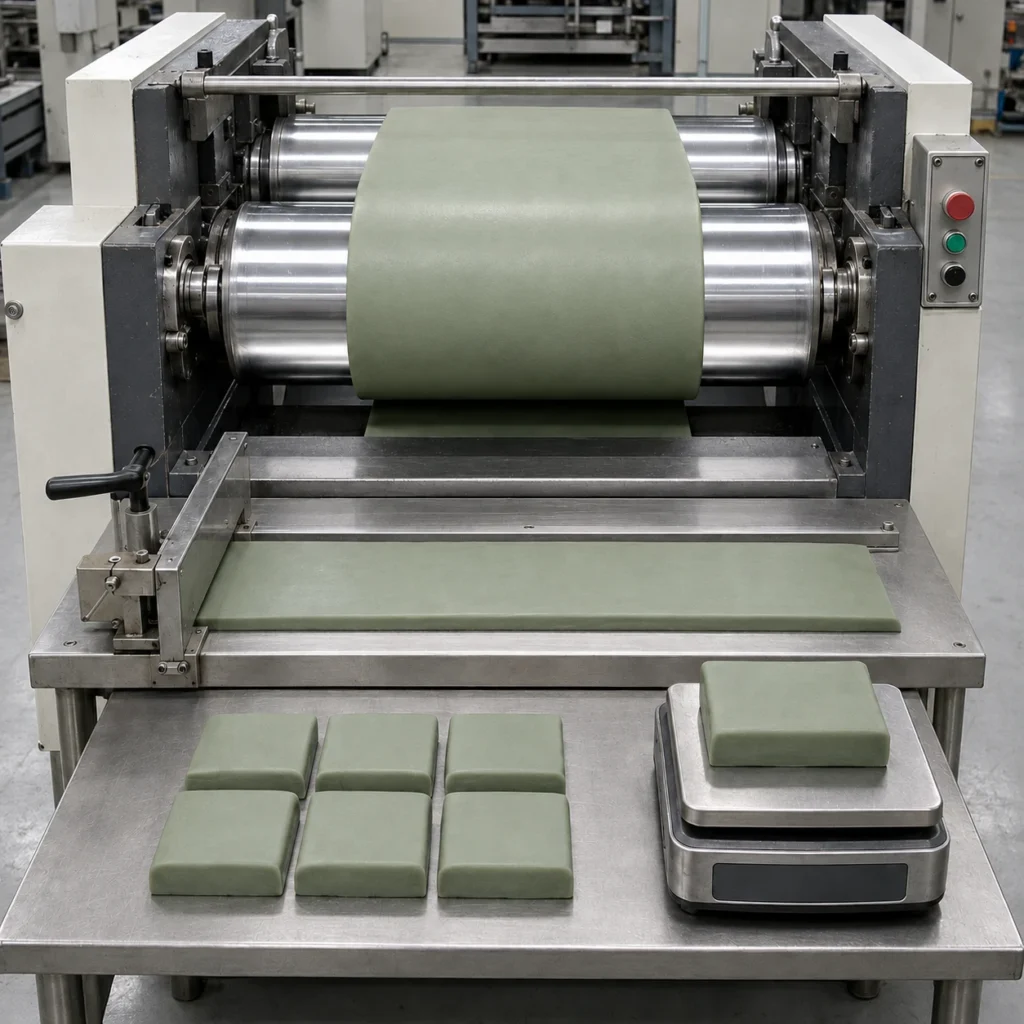
Solid Silicone Mixing, Color Matching & Preform Cutting

Solid Silicone Mixing, Color Matching & Preform Cutting

High-consistency silicone rubber is prepared with the required curing system and approved pigment. The compound is mixed until the material and color are uniform, then cut into pre-measured charges sized for the mold cavity.

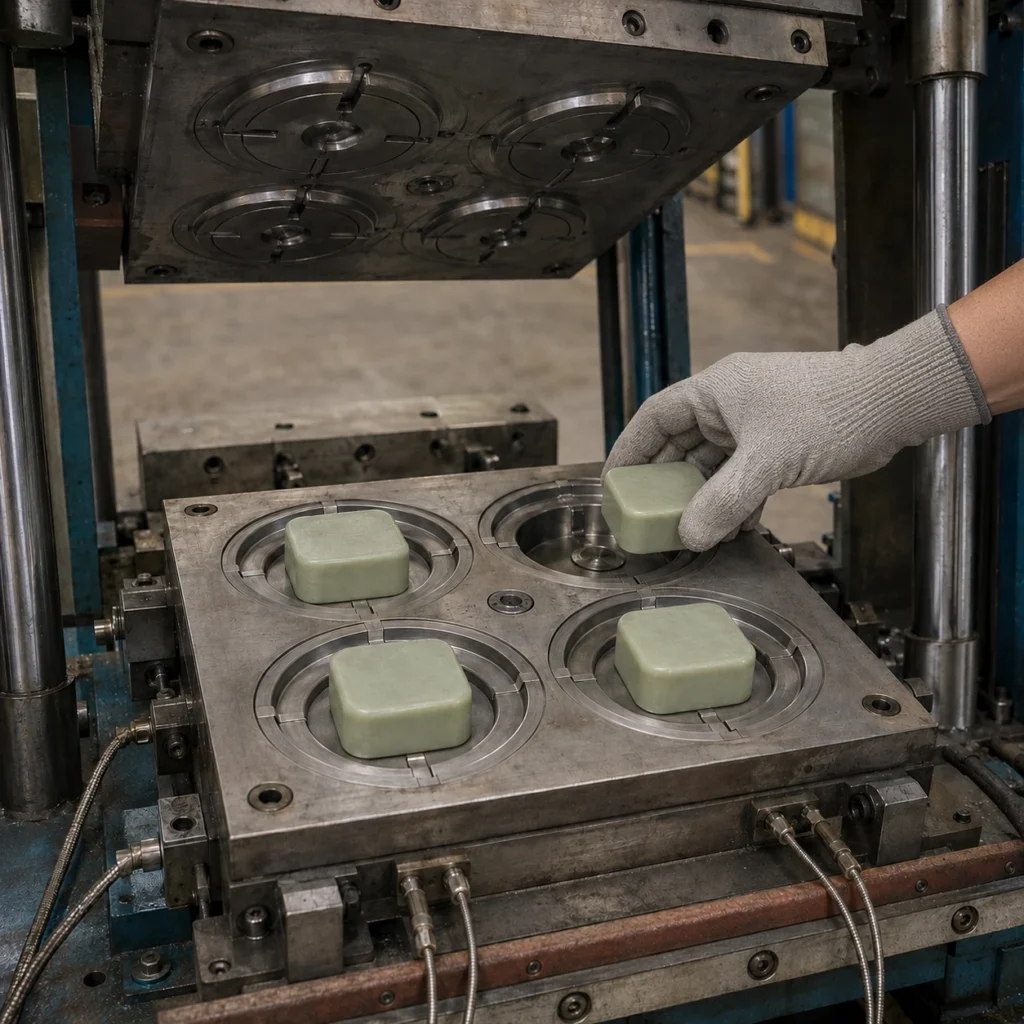
Pre-Measured Charges Placed in the Open Mold

Pre-Measured Charges Placed in the Open Mold

Each silicone charge is weighed and positioned in the open mold cavity. Correct charge weight and placement help the material flow into the required geometry while reducing incomplete filling, trapped air and unnecessary flash.

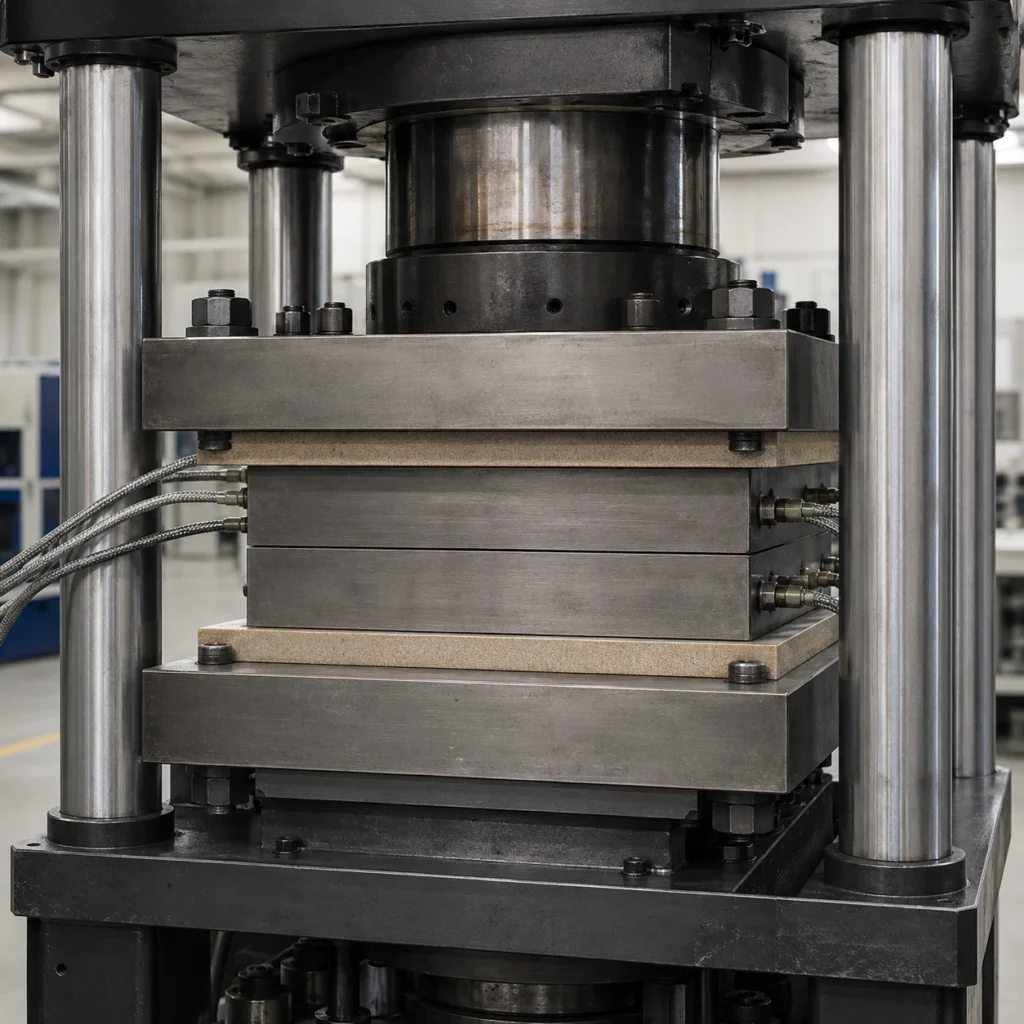
Heat Compression, Curing & Pressure Holding

Heat Compression, Curing & Pressure Holding

The mold closes and applies controlled heat and pressure. The solid silicone flows to fill the cavity and cures into its final elastomeric form during the defined temperature, pressure and holding cycle.

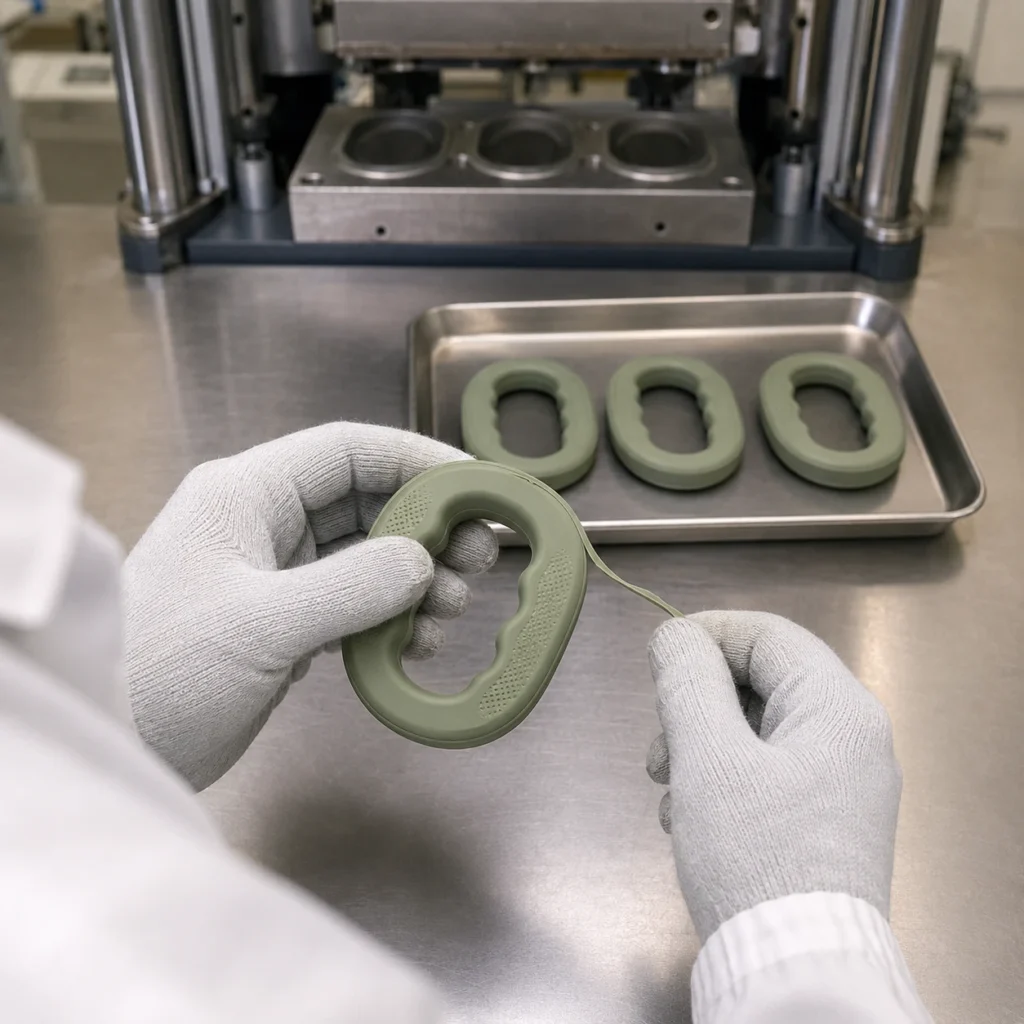
Demolding, Deflashing & Visual Inspection

Demolding, Deflashing & Visual Inspection

After curing, the mold opens and the part is removed. Flash and overflow material are trimmed, then the part is visually checked for incomplete filling, surface defects, contamination, tearing and other defined appearance criteria.

Buyer Questions

Frequently Asked Questions

Start Your Silicone Project

Not Sure Whether Silicone Compression Molding Fits Your Product?

Share your drawing, reference image or sample, application requirements, material or performance priorities, expected quantity range, and other relevant project requirements. We will review the information and discuss the next suitable step.

Explore Yushineon's OEM/ODM project process